Post Apocolyptic World & Animal Communication...
A series of books became a fast favourite and solidified my search for a deeper connection with horses.
Have you read Isobelle Carmody's obernewtyn chronicles?
This might be showing my age but it was a favourite series of mine in highschool. In a post apolocalyptic world after a nuclear warfare fall out some humans had developed the ability to talk to animals, in particular dogs, cats and horses.
At the same time I was so incredibly sad and lonely. (No real reason, probably teenage blues, but the pain was real). The pain was excruciating and my only refuge from it was in horses.
I developed my skills as a rider but deep down I wanted more. I wanted connection, I wanted communication, I wanted love, I wanted a deep heart felt relationship with my horse.
That painful need for love, fulfilment and happiness drove my compulsion to connect deeper with horses.
But the training methods of the time were good for shutting down horses and creating friction and disconnect. There is no place for connection in a submission based training model where the only acceptable answer is "yes maam"
In my bid to develop this relationship and still be able to ride and compete successfully i was fired by my instructor. "Natural horsemanship has no place in English competition training".
So since then I've been on the journey looking, seeking, finding a way to communicate with horses, hear what they have to say and find a way for them to still enjoy the training process.
And let me tell you its magic!
Because the horses want the same. They are just waiting for us to be open to communicate with them. But there is a lot of internal work to do because we have to speak from our heart.
And sometimes our heart needs some healing to unlock the potential for the depth of connection we seek.
What is Holistic Horsemanship?
In this training I go into our founding philosophies of how we provide our horses with a balanced emotional, mental and physical development in their training.
Confidence Through Curiosity - Christmas Edition!
Who says training can’t be festive?
We teach things a little differently here at Equestrian Movement.
One of things we prefer to do with spooky or anxious horses is to teach curiosity rather than desensitisation.
The key to developing confidence through curiosity is, once you have cued in the word with an object that isn't scary and you're ready to ask them to be curious, give them the patience and space to investigate of their own accord. You can't force curiosity. You have to allow the horse to find the courage to investigate it themselves.
This provides 2 big advantages over desensitisation (other than just shutting them down and flooding them)
🦄 it teaches them the emotional agility to shift out of fear in to curiosity so that in other situations when they get scared we can ask them to get curious instead.
🦄 once they get curious and investigate and realise its not that scary, they get really proud of themselves, which creates a positive experience for them to want to try again.
This is one of many emotional agility skills we cover inside our Trainability Program, because the hard part isn't the cue training it's the emotional coaching and relationship dynamics
The half halt secret...
The secret behind why your half halt may or may not be working.
Have you ever had issues with your half halt working?
What about even knowing if you are doing it correctly?
The reason why the half halt is so difficult to understand is because how you ride it with your body and what you are trying to achieve changes with the different levels of riding.
Watch this video to learn more.

It's not what you say...
it’s they way that they hear you
Have you ever had to teach your parents how to use technology? Or maybe your children have tried to teach you how to TikTok (goodness knows how terrified I am that my neice will try!)
It's almost like speaking two different languages.
So why do we expect our horses to understand what we tell them automatically - and expect ourselves to know what they are saying?
Recently I had teach my mother how to use Zoom to prepare for her first ever virtual meeting. As far as she was concerned, I was talking a whole new language.

To avoid the inevitable frustration that could ensue, I had to find a way to describe what I was asking in a way that she could follow, and she had to find a way to understand what I was saying.
(FYI that's not my mother in the image. She doesn't wear glasses )
The point is, it got me thinking. This is the same situation happening with our horses and ourselves - both of us are the teachers, and both of us are trying to understand the other explain.
The big difference - both of us can lose confidence in what each of us are trying to say or our capability of understanding because we don't speak in the same language - or even a derivative of the same language. And this loss of confidence can happen quickly or over a long period of time and makes it harder to break down the language barrier.
There is a way that we can start tear down those walls with our horses and begin to communicate on the same level.
If you want to know where to get started, join us on Tuesday's webinar The Great Language Divide - click the button below to learn more!
--Sarah
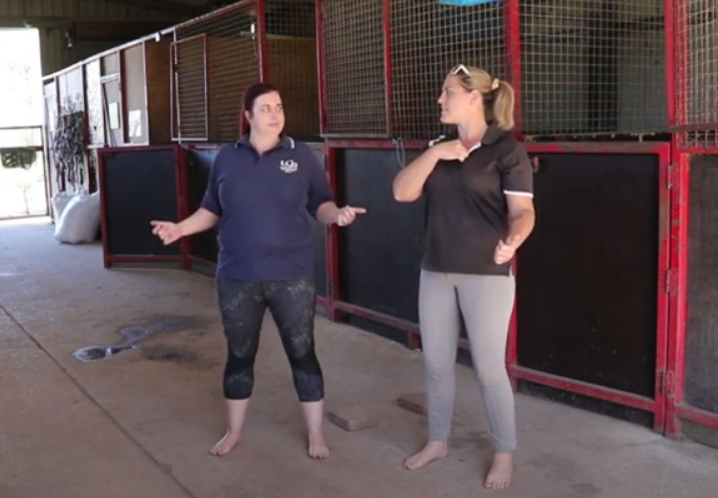
Guaranteed: This Video Will Help Your Position in the Saddle
and be good for a giggle as well!
In this training I'm sharing with you the exercises my students have to practice to stack their body for a good independent seat when horse riding.
If you implement this exercise and then think about stacking your body in the saddle I guarantee your riding will improve and your horse will thank you for it.
Most commonly the reason why we plateau in our riding is that our balance is interfering with our horses balance. Taking the time to focus on your coordination and balance will help you crack training blocks without having to work harder and 'push through' the training hurdles. Coordination is all about doing the slow work and concentrating so that your brain sends signals to isolate and engage muscles groups.
When we have these muscle groups isolating and switching on they start to work unconsciously and we can layer in the next skill.
If we don't refine what our body is doing unconsciously we will start to limit ours and our horses potential because what our body does unconsciously is crooked or unbalanced.
The wiring part is the slow part but if we take the time to wire correctly the first go then we are only refining as we progress instead of having to rewire new pathways because we developed our seat crooked and unbalanced the first time around.
Enjoyed this training? Follow our youtube channel for more great tips and trainings!
I shudder when I look back at my riding...
"Look at how soft my hands are" I used to think. Now all I see is dysfunction…
Did you know, this used to be my favourite photo?

"Look at how soft my hands are" I used to think.
But now, all I see in this photo is dysfunction.
It is hard for me to watch some riders when I go out to competitions, and some rider videos on social media. I know the damage they are doing because I have been there done that, under the guidance of coaches I trusted knew what was best for my horses.
Ten years ago, I was fired by my coach. Yep, actually fired. She told me I was unteachable.
Why?
Because I didn't like who I had to be and how I had to treat my horse to be successful int he industry and sport.
Sure, I could sit through all the bucks, "just push him through it". Heard every comment from "he's just being naughty, just testing you," to "He's a stallion, so you have to be more demanding of submission".
That day I was fired, I broke down in my lesson and cried. "There has to be a better way" I begged, and my coach walked out in frustration saying I was impossible.
All because I wanted to be the advocate and voice for a horse that couldn't do it for himself.
Looking back, I can see that his behaviours were not motivated by naughtiness or a lack of submission.
They were motivated from a lack of confidence, and a lack of understanding. The behaviours were deeply set in an insecurity of both his rider and what to do, compounded by movement that created musculoskeletal dysfunction.
I was so disheartened and conflicted, I almost gave up the equestrian sport altogether. If this is the rider I had to be - a rider that bullied submission and created potential harm to my horse seeking more frame & bend by driving him harder into my hands and into a deeper frame - then I didn't want to be a rider at all.
But here is the thing:
My quitting would do NOTHING for a sport that unknowingly yet incorrectly pushes these methods onto new students, or the horses that would have to suffer at the hands of these methods.
I have now spent the last 10 plus years obsessively working with horses, to find a way that focuses on:
the quality of the relationship;
the mental and emotional well-being;
physical soundness; and
athletisism.
I now practice and teach a method that works on building a stronger bond and deeper connection both in and out of the saddle through holistic horsemanship, so that we have horses that enjoy learning and working and ask to be ridden.
Are you ready to try riding your horse holistically, for not only a sound but athletic mind and body AND emotional resilience?
Are you also, like I was, struggling with conflict and confusion of how to be a conscientious equestrian athlete, that can make a difference for your horse and others across the globe?
If that is you, I welcome you to join our Self Carriage Program.
We are taking our last round of students for 2021, but enrolments close on the 24th of October.
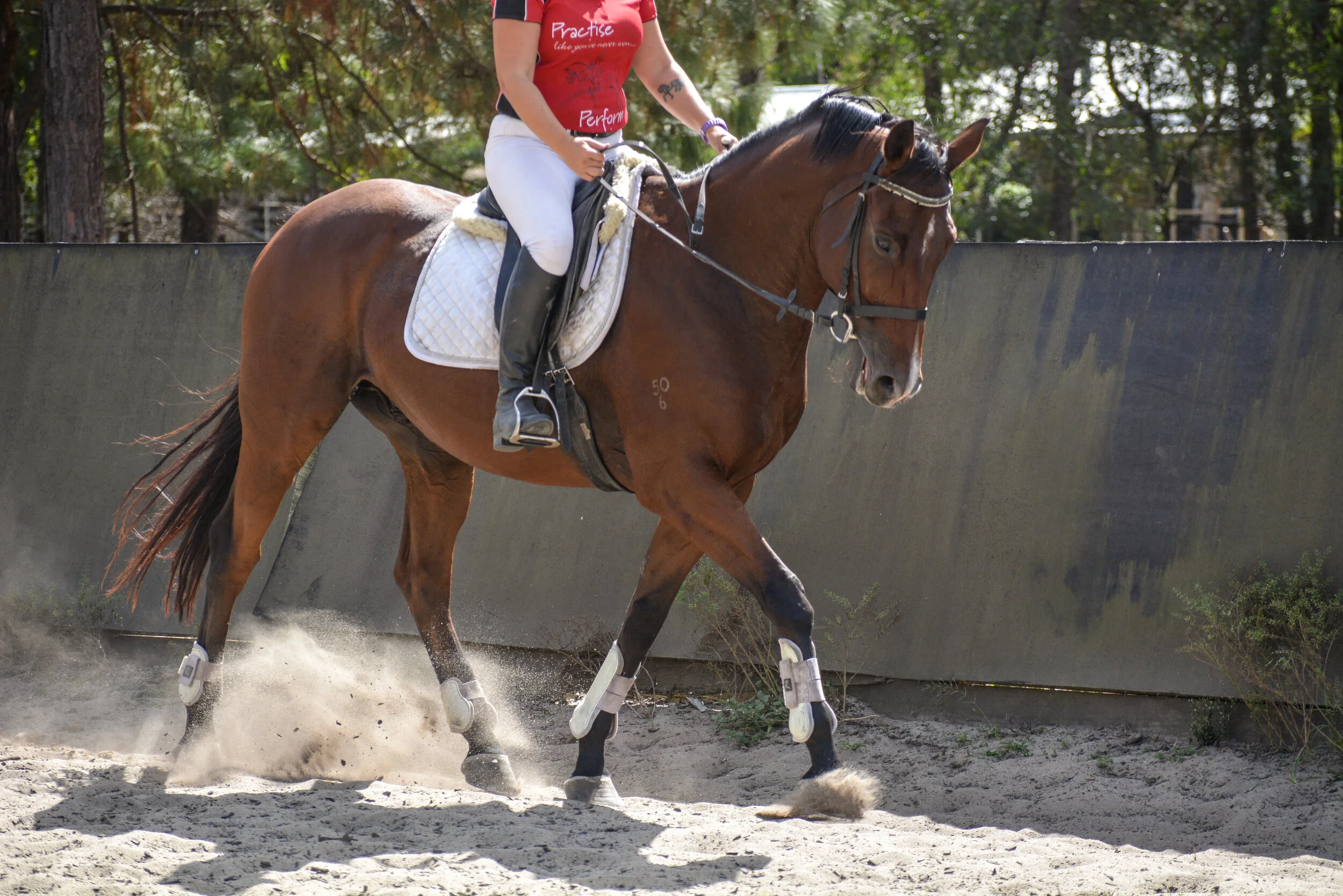
Why is my half halt not working?
Has your half halt stopped working? Maybe you have questioned if you are doing it correct…
Have you ever had issues with your half halt working?
What about even knowing if you are doing it correctly?
The reason why the half halt is so difficult to understand is because how you ride it with your body and what you are trying to achieve changes with the different levels of riding.
The half halt is a cue that communicates a specific action - "anticipation of what's next".
There is a mental and physical component required.
The horses mind has to ask "what are we about to do" and in their ask their body and movement rebalances to be ready for the next ask.
We also use the exercise to train the cue in, so you're not trying to control the horses body to be more balanced. You are changing what you are asking your horse to do. And it is in the preparation to change speed, direction, pace etc that your horse organises and rebalances their body for the change.
If you ever get the opportunity to ride a green, unbalanced horse, it will be good to understand how much we affect their ability to balance on their back.
For example:
riding a green horse, they don't have a whole lot of balance or a whole lot of clarity of complex aids. So a half halt for them looks like trot, walk, trot, walk, trot, think walk, trot on. In that hesitation where they thought they were about to walk they have organised and rebalanced their trot to be less strung out and on the forehand.
As they get more experienced, the aid refines and we can tidy it up. If you're horse is doing laterals and you are riding inside leg to outside rein, your outside rein starts to say sit, wait and your inside leg starts to say forward. In this way your riding your horse like a stick car. Your leg revs the energy and your rein is either engaging and building the energy or letting the energy out to be speed.
Caveat here: this doesn't work until you know how to ride true engagement, eg. The horse has to flex deeper through the hocks. Often the first big mistake riders make is trying to create a frame from bit pressure and then you have no way to communicate sit deeper into the hocks. As a result the horses rotate their pelvis for engagement instead of sitting through their haunches. In this case there is no way to communicate to the horse, "sit, rev, build energy" without forward because all they are thinking is tuck their nose from bit pressure.
The seat also increases in complexity as you move up the training scale, but basically it’s your body saying “get ready to” - you are switching on your balance muscles as well! I teach to turn the pelvic floor on and engage the core and then relax. This becomes an integration of movement. You switch your balance muscles on to change direction and in doing so the horse feels that and anticipates (half halts) the change and switches its balance muscles on so that when you do change direction or pace your horse is ready and waiting for the ask and can execute.
From the point where you say "get ready, were about to do something different", an educated horse takes 1 - 3 strides to switch their brain on and think about what's about to change (if you're good at cuing and clear in your aids and communication) and then another 3 to organise their body to execute. Green horses, well, they can take half an arena.
This is where things go wrong.
The rider thinks the horse should respond immediately.
The horse gets labelled as resistant and naughty - but it literally hasn't been given the time and the space to translate the question, figure out the answer and organise their body (aka half halt/hesitate/anticipate change).
This is how we introduce the idea or concept to our horses for the half halt. "Get ready to change" but then we don't change anything. We are teaching a new word/a new cue. That word/cue is balance.
If we are riding our half halts and we can't execute an upward or downward transition, we are no longer riding an effective half halt and we need to go back to doing transitions.
Using the half halt in the trot as an example, if too many times we say "get ready to walk, trot on" our horse stops thinking about the walk and is only thinking about the "trot on". Our horse is no longer organising their body in anticipation and only thinking trot. So we need to intersperse our "get ready to" cue with "continue on" and "get ready to" cue with "now change".
Do you have any questions about your half halt? Pop them in the comments, follow our podcast, or check out this video on youtube!
A discussion on bucking
Recently I was asked the infamous question “why does my horse buck”.
In this video, I’m going to share with you the most likely reasons your horse is giving you that sign.
Recently I was asked the infamous question “why does my horse buck”.
In this video, I’m going to share with you the most likely reasons your horse is giving you that sign.
Managing Bold Behaviours Webinar Replay
Big behaviours our horses show us are scary!!
Big behaviours our horses show us are scary!!
And even more intimidating is knowing the right way to handle them!!
The horse industry and science of training has shifted significantly in the last 10 years and the "power over" model of training ie. "push them through it", submission and control based training is becoming dated.
In this training we are going to cover some other training tools that you can add to your tool kit so that you can adapt your training to suit your horses unique, individual and personality based needs.
We are covering:
Attachment theory (ie does your horse feel safe, confident and relaxed with you?)
Cue training (ie does your horse understand what you are asking of them?)
Learning behaviours (is your horses behaviour escalating when they don't know what the right answer is?)
And how we can bring these 3 tools together in holistic horse training so that we have horses that have a positive work ethic, are confident and trusting, understand how to emotional reset and as a trainer you understand how to shape out a more positive interaction.
In this process we need a mindset shift away from the horse is just being naughty, push them through it, in to my horse is trying to communicate a need that is not met, how do I best support them?
Learn more about how you can manage these behaviours in a way that doesn't damage your horse's unique personality or learning here: www.equestrianmovement.com.au/trainability
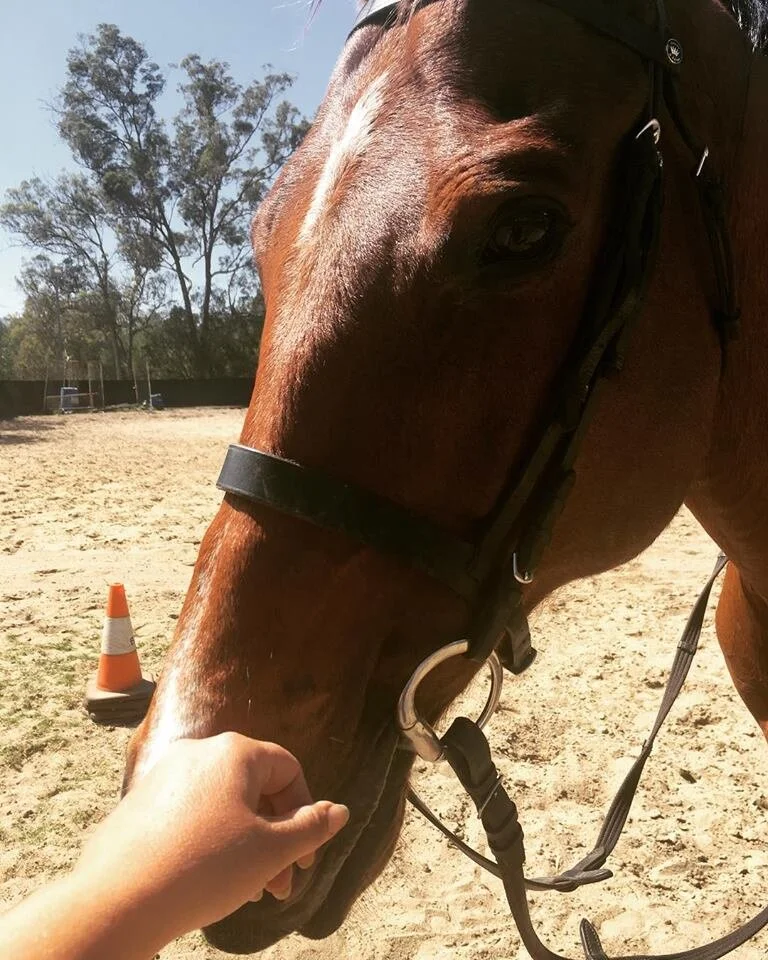
Communication buttons and some of our student hiccups!
We have been playing at the Riding Academy with communication buttons…
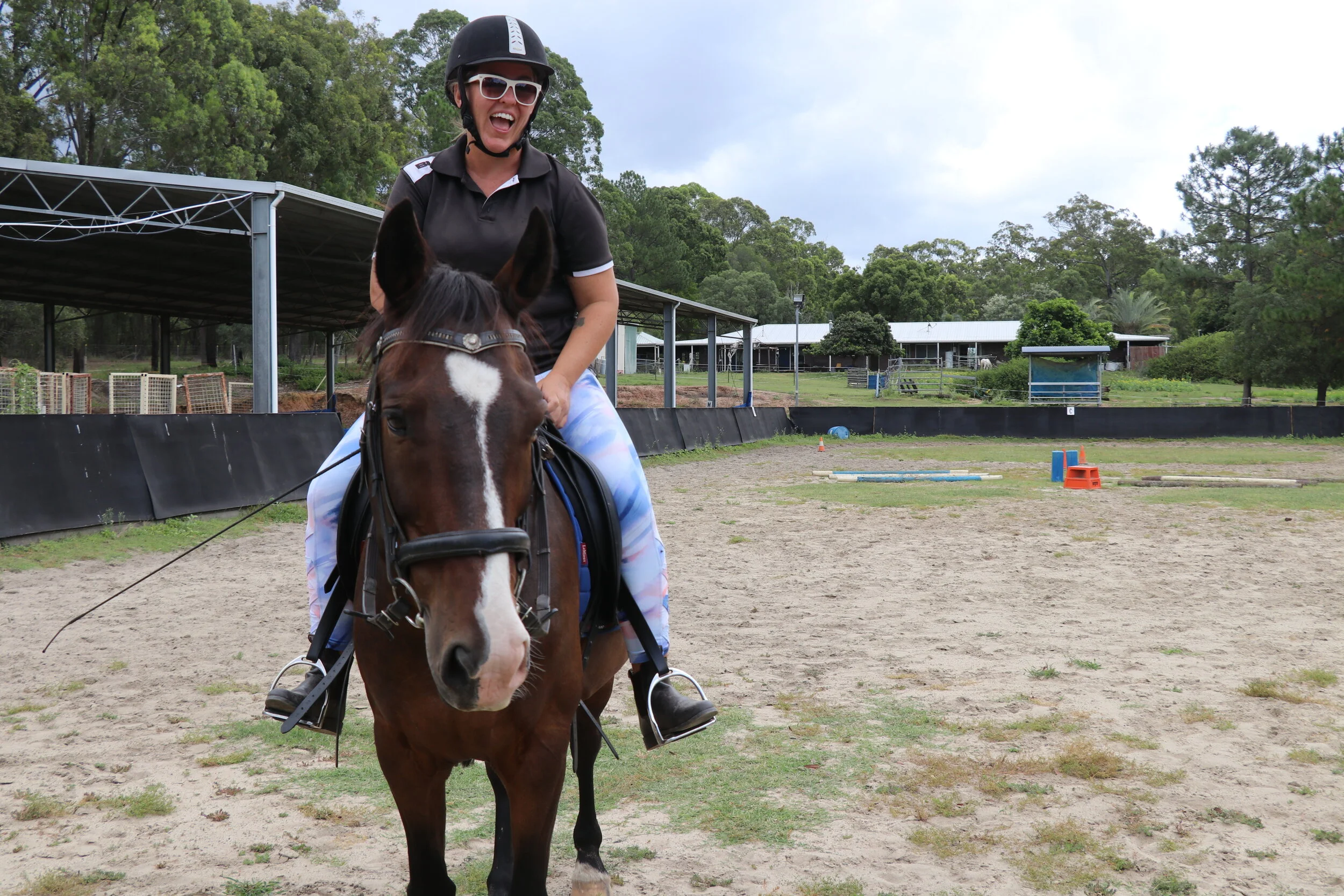
Did you learn feel when you first rode?
Most people aren’t taugh this
Have you ever wondered why very few instructors teach feel?
In our recent 3 day workshop, Katie shared the secrets behind one of the least taught, yet most important piece of the riding puzzle that not only steps you away from "force" and power over model of training, which doesn't encourage you or your horse to learn, but instead to focus on what is actually happening inside a partnership of truly connected riding.
Regardless of whether you are riding competitively or just wanting to enjoy your time together, DEVELOPING FEEL is an important big step towards your goal.
It helps you put your training into practice with minimal effort. Every. Single. Ride.
But FEEL is only one part of the puzzle. There are 5 other pillars you need as a rider so you can truly lead the partnership and become that Powerfully Connected Equestrian we dream of being.
FEEL will let you know when your horse is not coping emotionally, but you need to know what to do to help them through the moment, build emotional resilience (and desire to look after you the same way), and understand how to structure your interactions to foster positive emotions.
FEEL will tell you if your horse's mind is on the work in front of the or not, but it doesn't result in you automatically knowing how to re-engage the learning brain or when to finish on that positive note.
FEEL will give you an indication of when a movement isn't working quite right, but it doesn't teach you what exercise you need to practice to build core strength and topline without compromising the soundness of your horse, or how to correct that movement.
FEEL will aid your development of communication in the saddle, but doesn't show you how to start or how to use it.
FEEL will tell you when your horse is ready for self carriage, but doesn't step you through how to stop getting in their way with your posture, which is the final phase of inhibition of progress and soundness.
The Self Carriage Program (which Katie still refers to as the Green to Self Carriage Course) will help you step through all of those AND Katie will help mentor you through your progress and to your goals!
So if you are:
Feeling stuck doing the same exercises and not getting anywhere
Anxious because your horse has some behaviours that are scary or dangerous when riding
Confused how to put together your riding sessions or troubleshoot your ride without your instructor present
Wanting to ride in a way that encourages true willingness, partnership, and let's face it, that magical unicorn moment...
It is time to step out of the mentality of the Struggling Well-Intended Horsewoman and make the steps to becoming the Powerfully Connected Equestrian.
The Self Carriage Program is open to new students but only until September 12.
If you are ready to transform your riding and kick your goals, get in quick!
Developing Feel - the Ride With Heart Workshop Replays
only available until September 12th 2021
Replays only available until September 12th 2021
Make sure to watch all 3.5 hours of video before the timer ends!
Day 1: Why you should trust in your feel
Day 2: Why feel is important
Day 3: Feel & Connection in Practice
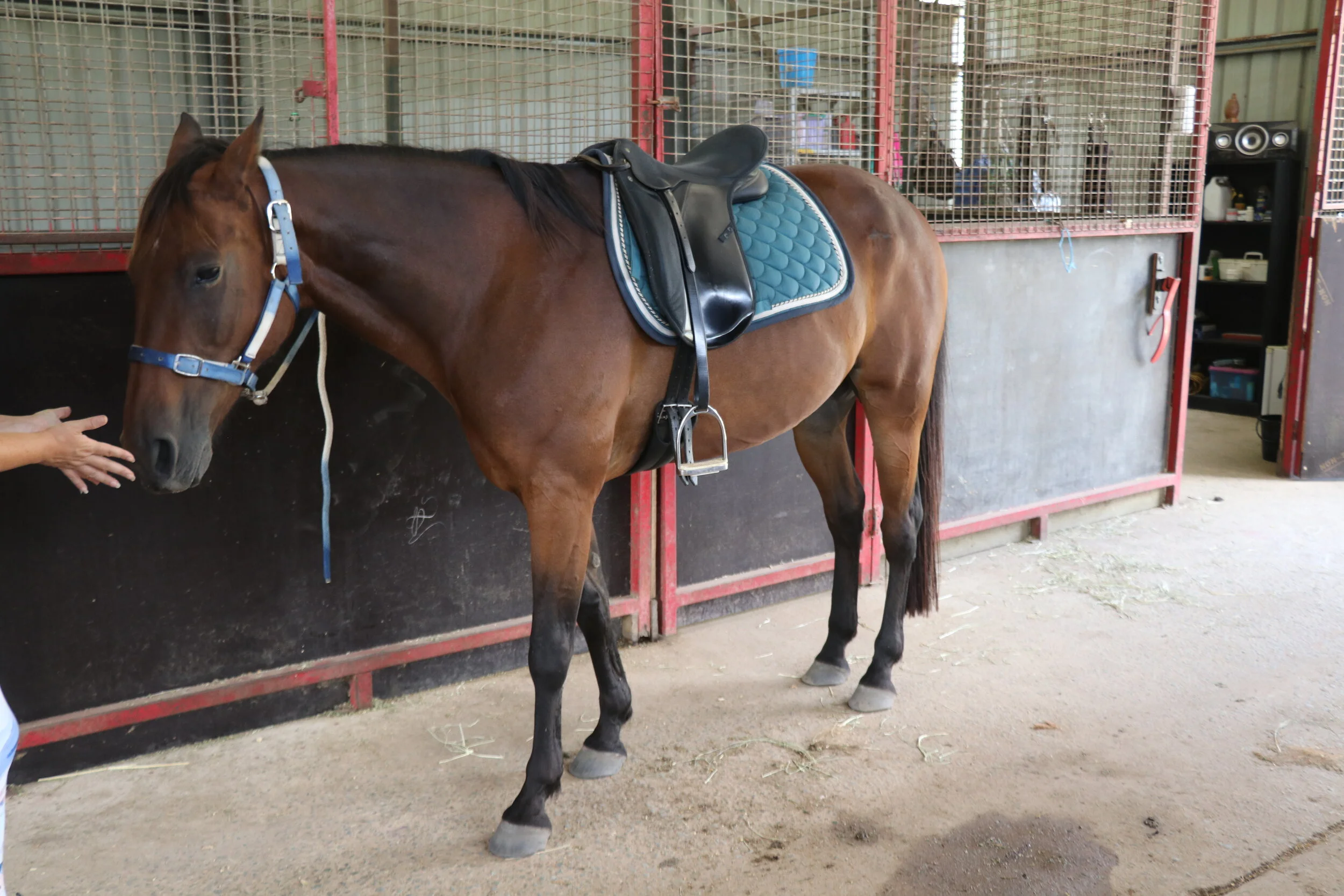
The Six Skills You Need As A Rider
Have you ever considered what skills you need to have to be a great rider?
Have you ever considered what skills you need to have to be a great rider?
Regardless of whether you are competing, your are rehabilitating your horse, or you are riding casually, there are six key skills that you need - and no, I am not talking about toes in or inside leg to outside rein!
Part of being a Connected Rider is managing your team - that team being you and your horse. So your skills must grow and develop in a way that supports one of your most critical team elements - your horse!
Our recent Ride With Heart workshop actually focused on one of these elements, but here are all seven for you to ponder.
You need to be able to create an emotionally safe environment for you horse, so you can both feel confident, safe and as part of a team;
You need to be able to activate your horses learning brain and avoid over-facing them, so they can apply themselves and not lose their "na-na";
You need to be able to "feel" what your horse is doing and thinking, because you don't have eyes all around your head and you can't always see what all four legs are doing;
You need to know how to structure your riding exercises so they compliment one another to build core strength and topline, to create a sound horse that enjoys movement and can progress, and to help them hold us balanced and willingly;
You need to be able to use bit pressure as a tool of communication that asks your horse to participate, not submission where you force the horse when they may not be mentally ready or structural capable;
You need to know how to ride in a way that means you are not inhibiting your horse's movement but in fact improving it.
It's the reason I put together the Self Carriage Program - so more students can see and expand their skills and become a truly connected equestrian and part of a willing, caring team.
Colleague and student of the Self Carriage Program Sarah & our school horse Gunner have recently joined group riding lessons - both are pretty green when it comes to riding with other people and horses.
With Gunner's drafty background, his response when he is overfaced is to become ignorant, ignoring aids and running through the bit, which of course is not ideal when you have a beginner or unconfident rider!
But because Sarah has worked so hard to be a Connected Rider, I knew I could place this challenge on her. Not only is she comfident with his personality, she knows how to scale down to baby aids when he stops listening, how to feel his focus leave and how bring it back onto his rider, how to structure his ride to put him back into that learning brain, and how to create wins that builds both their confidence and skills moving forward.
That might seem like a small challenge, but these small challenges that are achievable create wins and kick goals.
Not once did she have to "push him through it" or be the "bigger, badder, boss". All of this was achieved through emotional regulation, learning brain, understanding the foundation exercises, developing feel and starting to create communication through the bit.
So I have to ask you - are you ready to make a change?
Are you ready to stop being worried about riding because your horse feels good when ridden, has learnt to manage their behaviours and enjoys being your partner?
Are you ready to kick goals because you have structured your riding to progress - even if that means revisiting your foundations - because you know how to scale up and down based on what your horse needs and your horse has a willing, engaged learning brain?
Are you ready to bring the joy back into your equestrian partnership because you are no longer fighting and using the "power over" model to get where you need to be, but embrassing a true partnership?
If that is you, it is time to take the next step in your adventure and join the Self Carriage Program.
Enrolments are only open for a short time - get in quick!
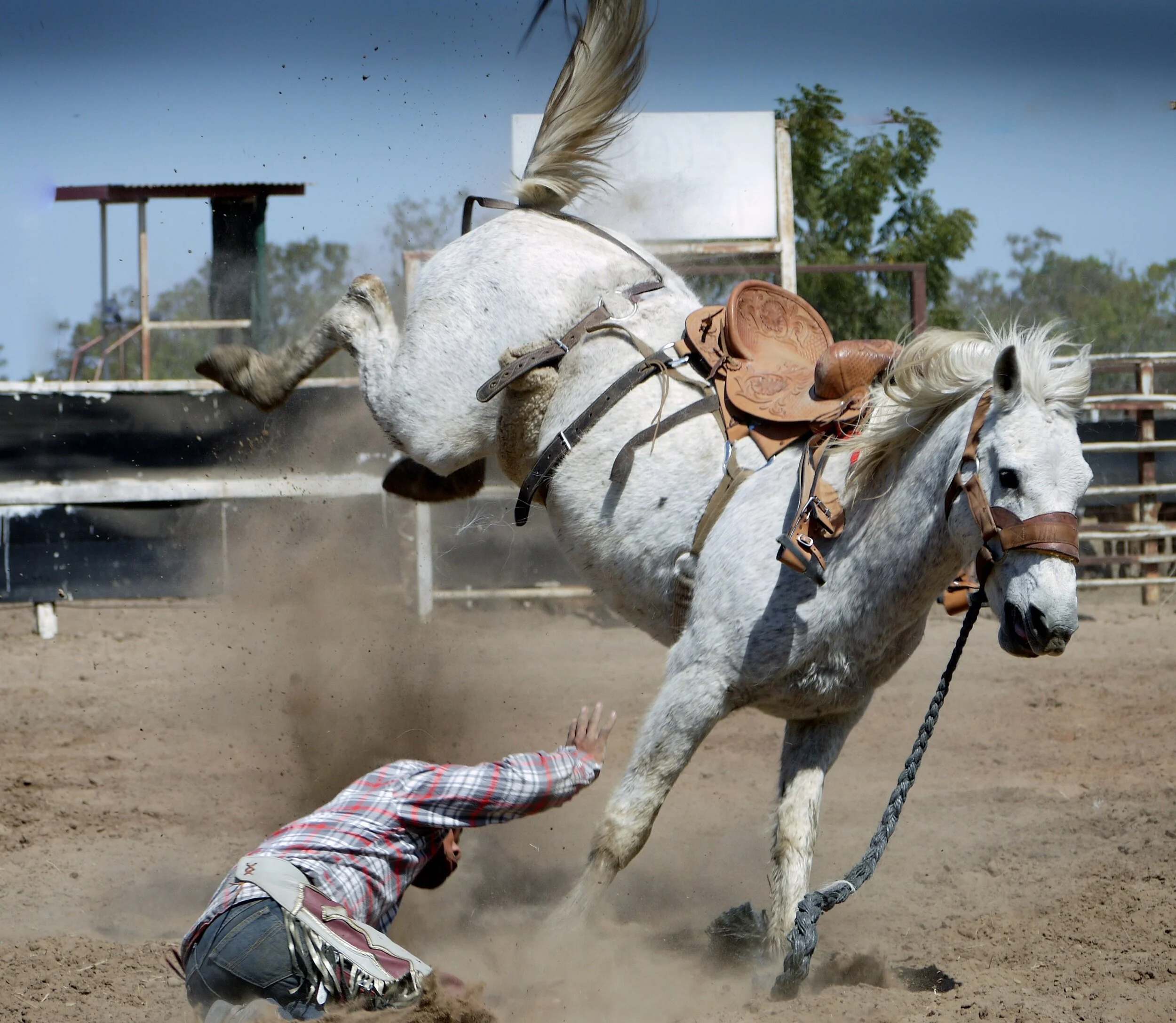
Why Does My Horse Buck?
Bucking can be a real struggle for some equestrians, least of which is there are a number of reasons that cause it. Katie is running through the different reasons your horse might be bucking.
Bucking. It’s one of those “loud” signs horses give us to tell us something isn’t working quite right.
I’m willing to bet if you are experiencing bucking and searching for a reason, that you:
Aren’t sure what caused the buck
Aren’t sure where the next buck will happen
Are worried that this behaviour might escalate to even more dangerous movement or cause you pain
And that’s if you managed to sit through the buck to start with.
Troubleshooting bucking is not easy but shouldn’t be ignored. If you are struggling with isolating the cause of the buck, I’m going to share my best advice so that you can get back on your horse with confidence, like the champion horsewoman you are!
What are the reasons your horse might buck?
Is there pain?
Saddle fit, teeth, ulcers - anything that is going to be causing discomfort to your horse, could result in bucking. It is such a minefield to navigate to the solution and can be difficult to troubleshoot.
That’s why at Equestrian Movement we help the struggling equestriansto work on consent work, which allows your horse to tell you during early stages and with less violent methods that they may be feeling discomfort. This can allow you to narrow down the likely area of discomfort, instead of spending months circling around the different possibilities and back again.
One example is the horse that has trauma associated with bit pressure. If we are doing their consent work, they wont consent the bridle. If we were to push this horse through, he may decide to buck when he feels bit pressure.
2. Have you considered your mounting process?
I once had a really big fall with a 16.3HH Warmblood that had problems with mounting. As I went to mount, one foot in the stirrup (the other foot hadn’t even swung over saddle yet), he would start broncing like a rodeo horse. That got me in a situation where I lost confidence mounting horses - especially unknown horses.
If your horse is bucking at or just after mounting, you need to really look at what is happening there.
So if your horse is bucking when you are mounting, make sure you are looking at these potential causes:
Your toe isn’t digginig or dragging into their ribs when you mount;
You have a good athletic spring when you go to mount, which if you lack, they need to tense their back to avoid us causing damage to their back due to us twisting the saddle.
You are not kicking them when you swing the leg over
You are sitting gently once you have swung your leg over.
Creating a good mounting technique where you have balance and control of your body, not pulling yourself up into the saddle and plonking yourself into the seat of the saddle, goes a long way to ensuring the soundness of your horses back as well as ensuring you don’t aggrevate your horse into needing to buck.
3. Is the musculoskeletal alignment “off”?
Quite often, when you are in the introductory stages of training your horse and you are trying to get them into a frame, if you are just asking for submission to the bit and creating lightness for the horse just tucking their nose behind the bit instead of elevating the forehand, what you are going to be doing is creating a musculoskeletal disalignment by creating posterior pelvic tilt (want to see what it looks like when a horse has posterior pelvic tilt that is interferring with the alignment and how that is an antagonising factor towards them bucking? Watch it here).
In particular, if you are seeing bucking after poles, jumps, or canter transitions, this is the likely cause. Anything where they go from a more flat movement like trot, to a movement with a more rounded movement, like the canter, where they have to use their whole back to actually give us a canter stride. Whereas in trot, they can be quite hollow and tight through their back, and we wont notice their back isn’t warmed up enough for those more rounded movements when they just tuck their nose behind the bit and twist their pelvis to provide you what we refer to as the false frame. A false frame doesn’t engage their musculoskeletal alignement or help develop their topline muscle to help them come up into a frame - they will be breaking away at the third vertebrae to give you flexion of their neck, instead of seeking the contact, working into your hands then coming up through the wither to come up into contact.
So we will see this translating into bucking under saddle especially when the horse needs to use their back to do what we ask.
If you think this might be the reason your horse is bucking and you want to stop being the struggling equestrian trying to figure out how to correct the muscluskeletal alignment issue, just reach out and ask us (this is why I ended up putting together the Self Carriage Program, which steps you through the foundations to the end point of the development of a natural frame, how to work them for soundness and to seek the contact, and the development of true musculoskeletal alignment and good posture).
4. Does your horse allow your on it’s back?
Here’s a fun one to consider - most struggling equestrians assume horses are built to accept riding, but do they really?
Have you ever seen a person being hugged by a less familiar acquintance? The tight bracing posture, the lack of connection, and overall lack of willingness to melt into the hug? The same can happen for our horses.
Of course, that means they brace their back, then we brace, then they get tighter, and all that tightness needs to unwind somewhere - i.e. the buck.
Working on emotional connection, communication, having a horse invite you onto their back (some signals they give include them squaring out and bracing their legs, then relaxing you into their back), and ensuring they are ready for the next ask, will impact your quality of riding as well as groundwork.
5. Is your horse coping with worry (or not coping with the worry)?
Your horse can develop worry. We ask something of them, they hold a little bit of tension. We ask something else, they hold some more. Soon, they reach a point where their “worry cup” is full, they no longer cope with the stress, and they can no longer control their behaviours because they can no longer control their emotions.
At Equestrian Movement, we work firstly from the principle of First Do No Harm, then secondly giving our horses the tools to empty their “worry cup”. We use tools that include building a relationship, communication, confidence and trust to help the develop mechanisms that empty that worry cup without having to resort to dangerous actions. We teach the struggling equestrian to identify when that worry cup is filling so they can support their horse through the more intense moments. (We put these skills first as groundwork that then translates under the saddle in our Trainabilty Program, and is also included in the higher tiered Self Carriage Program).
Has this helped you troubleshooting your bucking issue?
By all means, reach out to us directly by either commenting below or via email if you have any questions around why your horse is bucking.
If you suspect that the reason may be musculoskeletal, you can always pop on over to our latest free mini course, which takes you through the how and why we structure their training in a particular way to develop their topline and natural frame. Click the button below:
Developing Respect
True respect is earnt, not demanded…
True respect is earnt, not demanded…
Incorporating Play
Incorporating play through connection based liberty helps to flesh out a language between us and our horse through movement.
It is a motivator we can use to back off pressure and it means that both us and our horses enjoy each more!!
And don’t forget to check out our membership training trainability to work with your horse so that your training is more fun, the connection is deeper, the cues are clearer, you both are better at organising your emotions and you can work with consent and permission based training.
How can we get our horses to respect us?
Demanding attention and submission “no questions asked” is respect by default.
How can we get our horses to respect us?
When we are talking about respect, this idea can often be misconstrued as submission.
True respect is showing up as someone for your horse worth following, worthy of their respect, taking the lead not through force but through offering the horse the support and guidance they need to be confident in themselves and thrive in their environment.
Part of developing respect from your horse is setting appropriate boundaries and establishing expectations of their behaviours.
The other most important part of developing respect is providing the tools the horses needs to thrive in the horse human relationship.
Do you know how to provide emotional self regulation support?
Are you communicating clearly?
Are you listening.
Demanding attention and submission “no questions asked” is respect by default.
They are too scared to ask questions.
But this also means they are too scared to find answers.
Commanding their attention because your presence is something worthy of their attention gets them interested, engaged and willingly participating in their training session and activities with you.
Want some help figuring out how to be a person worth following for your horse?
Check out our free online training. www.equestrianmovement.com/connection

Teaching Emotional Regulation
Who said Katie couldn’t help horses get over their fear of pigs?
In this video, Katie is building Phoenix’s confidence around his new sister, Ella the pig. Phoenix was absolutely terrified of moving through the gate because Ella sleeps beside it and pigs are big, scary and smelly (or at least, that what Phoenix was saying with his behaviours).
By the end of the second training session, he was relaxing and breathing, could walk through the gate without trampling or freaking out, and even nose-bumped Ella the pig.
While you won’t see the full session here, this little captioned snapshot will share some of Katie’s tips on teaching emotional regulation.
AND…Who said Katie couldn’t help horses get over their fear of pigs???? Challenge accepted and conquered!
Interested in the connection training mentioned in the video?
Click the button below to learn more.
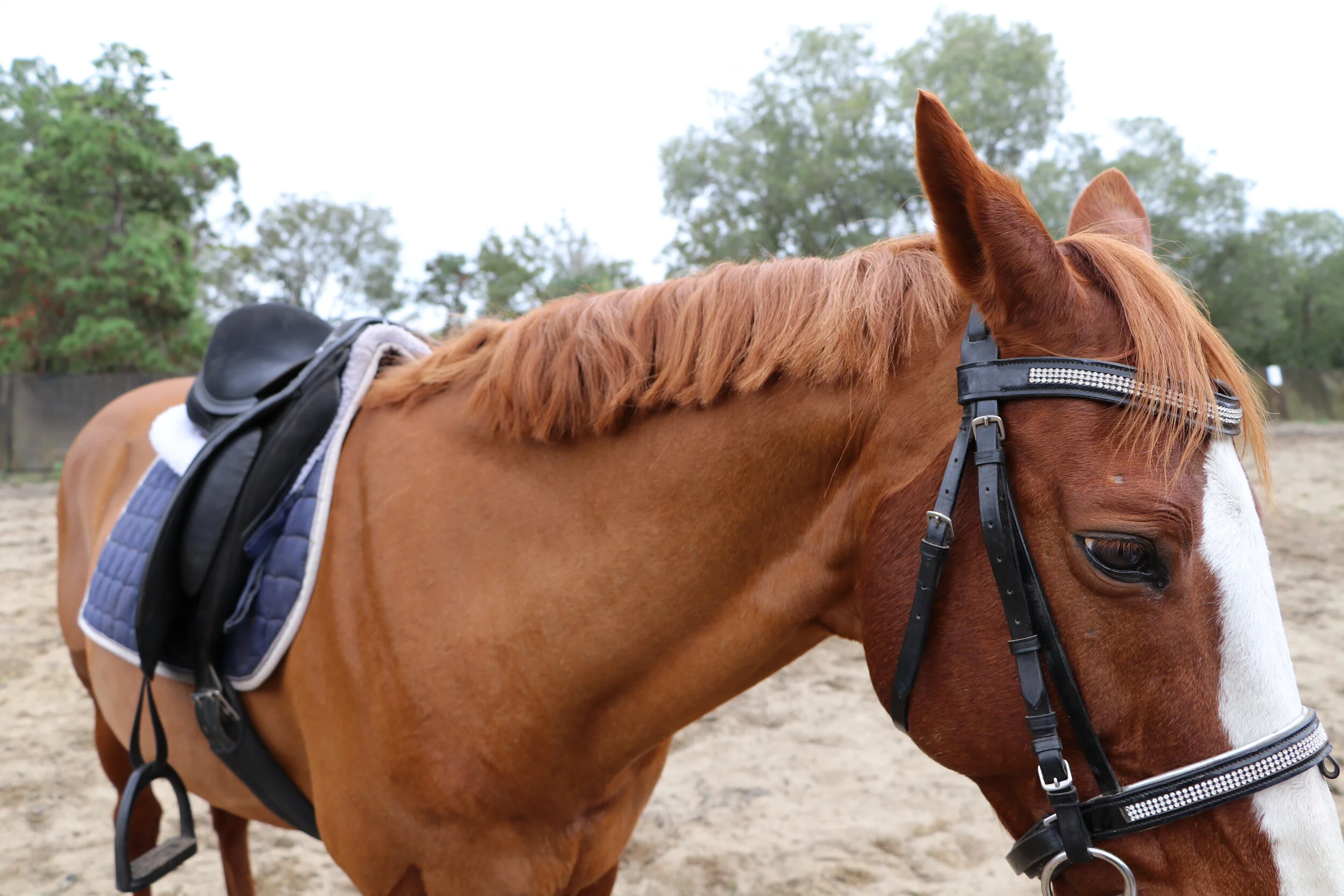
Have I damaged my bond with my horse forever?
Have you had a moment where you thought this?
You know the moment we are talking about.
It’s the moment where you thought:
I’ve royally buggered this up and my horse is never going to trust me again
There may or may not be a number of expletives inserted in that thought, but you get the point.
It happens to all of us at some point when we develop an awareness that we want to work with connection. That’s the one downside of wanting to build a connection - it’s doubting that the connection can be fixed if it is broken.
Here is a little truth for you:
Very rarely will you do something that truly damages the ability to build connection forever!
That is, if you are working from the desire to build connection with your horse, you are already mindful that your horse is an emotional being. And even if you aren’t sure what your next step is, you are already looking at and assessing their behaviour, and trying to get to know their personality and needs.
Avoid the setbacks in your connection building
Learn how to build a deep bond and be the horse person you want to be through the Trainability Coaching Program
Click here to learn moreBut yes, you can temporarily put a glitch in the connection you were working on. Whether it is because you pushed too hard, tried too much, or simply missed the subtle pre-meltdown signs, it can and will happen from time to time. The important part is how you show up for you horse before, during and after the event.
So what do you do when you think you have damaged your bond?
Go back to the foundations
Give your horse time
Don’t get emotionally invested in the outcome of the session
Learn how to reconnect with your horse after these events
Where to from here?
Equestrian Movement has some great assets available for you to access today:
Do it yourself
If you want to learn a bit about how you can use exercises that establish a bond and help you reconnect, have a look at the Building Connection Course, Workshop & Masterclass.
This self paced program allows you to return again and again and shows you the practice with different horse personalities.
I need help!
Perhaps you are really struggling to get that break through moment of connection, or your horse is really just not easy for you to work with right now - or maybe you even just want your best steps laid out specific to you and your horse’s individual situation.
If that is what you are looking for, then our Trainability Coaching Program is your best step.
We work with you to understand your horse and your needs, give you full access to the Trainability Course, and point you in the direction of each step you need. Included in the program is monthly coaching, where you can reach out and ask any question you like around building a deep connection and helping your horse develop mental relaxation (and you don’t have to wait for the coaching call, you can ask any time!).
The Trainability Coaching Program is designed to help you get your wins as quickly as you and your horse can achieve them.
Looking for more specific content?
Have a question you are seeking answers to? Send us a message and we will create a blog!
Save your seat at this free webinar