What a confident horse looks like...
You might be surprised what a truly confident horse looks like!
Do you know what an all-rounder confident horse truly looks like?
Nope, not talking about the horse that will just do anything because you said so. Or that horse that is willing to push it’s paddock buddies (and you) around. And definitely not the horse that is willing to take you out. In fact, those are all signs of some form of insecurity.
A truly confident horse:
Has confidence in themself;
Has confidence in you; AND
Has confidence in you together as a team.
This horse is comfortable expressing it’s needs, asking for time to process its learning and stressors, and has built mechanisms to help it emotionally regulate.
This horse is confident in you, as a compassionate leader. It is confident you will listen and support when asked. It is confident that you will not place them in a situation that will overface them - and help them if those situations do arise.
This horse is confident in the powerfully connected team YOU have created. And you have the confidence knowing you were intergral in the development of THIS HORSE.
Want to see what some of these horses look like?
Check out the relaxed, confident horses at their first obstacle course adventure below! From scary bridges and wobbly see-saws, to tarp curtains and noodle-gates, these horses all displayed confidence in themselves, their handler and the team.
So how do you achieve this powerfully connected team filled with confidence in each other? There are several key components inside the Holistic Horse Handling Methodology that we focus on when building confidence:
Build a process of communication and consent;
Create a learning environment and relaxation cue;
Teach curiosity to help your horse cope with the strange environmental challenges they will inevitably come across; and
Be the human your horse needs you to be!
Confidence is a team effort. Are you ready to be a powerfully connected team?
Photos by Rhiannon Kelly Photography.


Problem Horse Series: My horse spooks at EVERYTHING!!!
Join us as we work through differen problems using the Holistic Horse Handling Methodology. I'm going to show you how we work through Phoenix’s (the horse) spooky behaviours in response to Ella (the pig).
Join us on our problem horse series where we share with you all things holistic horse handling. In todays episode we are covering the horse that spooks at everything!!
I'm going to show you how we work through Phoenix’s (the horse) spooky behaviours in response to Ella (the pig).
Yes, these spooks don't look like much - but that is because we believe in creating psychological safety for our horses and not working them at, close to or over threshold. This also means we prefer to have the skills the horse needs to engage in the training exercises and stay under threshold established before we do the training session. It also means we listen to the horse to tell us when they are emotionally stretched so that we can stop on a positive note feeling like we could've done more.
Want the step before this training? Join our confidence through curiousity course.
Desensitisation is creating horses with learned helplessness!
Desensitization is one of the big pow-wow, go-to tools used in horse training across the globe. But here’s the thing – this powerful training tool is creating learned helplessness in horses!
Desensitization is one of those big, “pow-wow”, go-to tools used and recommended by horse owners and trainers across the globe. But here’s the thing – this powerful training tool is creating learned helplessness in horses!
It isn’t that desensitization is a bad thing. But the concept of desensitization has been lost inside the idea that it is a cure-all for anxious, flighty horses.
When using desensitization as a tool, it insisted that the horse not react to whatever stimulus is being paraded around them – whether it is a flag, tarp, plastic bag, rope or even a rider. But without a number of crucial elements, we push our horses into shut down, and with enough repetition, learned helplessness.
More often than not during the “training” process, the horse is inside the fight/flight/freeze mode instead of in a learning brain – because of these missing elements that makes true desensitization a powerful and successful tool.
Sure, the end result may be a horse that doesn’t react, but this isn’t because they have learnt not to be afraid of the scary flag/tarp etc, but because they have learnt to be more afraid of what will happen to them if they DO react. Literally, this horse is submitting themselves to the handler because they no longer have control of their survival.
Eventually, this inability to manage their own survival skills is what becomes learned helplessness. The horse is giving up all will to survive and living only at the demand of its handler. And that’s not the type of connection I want with my horse, or any horse for that matter.
Desensitization, without relaxation, communication and consent, is causing learned helplessness. So instead of asking your horse to give up control of their survival, why not ask them to be curious and confident instead?
Our obstacle day adventures!
Holistic horse handling in practise!
Holistic horse handling in practise!
For those of you that don't know, we have our physical school in Logan Village in Brisbane where we implement our holistic horse handling skills with our students and horses. Our show team get to take the school horses off property and test their skills they are learning to see how well they are doing with great success!!
We recently had a training day at the Que Sera Farm obstacle course and I was so chuffed with how well all the students and horses handled themselves in navigating the course.
Our 2 main skills implemented were:
relaxation cues
confidence through curiousity
consent and choice.
You can get access to the waitlist for this course over at our website:
My horse is testing me
We are often told by our peers and industry professionals that our horse is testing us and challenging us, and that we need to push them through it, make them do it or else you will end up with a dangerous horse.
My question to you is, why is your horse testing you?
We are often told by our peers and industry professionals that our horse is testing us and challenging us, and that we need to push them through it, make them do it or else you will end up with a dangerous horse.
My question to you is, why is your horse testing you?
There are 2 common reasons I see horses testing their riders:
They don't want to put the effort it, they are testing to see what is the bare minimum effort they can give
They don't have faith, trust or confidence in their rider/handler to be a good leader and make good decisions, so the stop following your lead and start questioning your decisions.
The second one is where we most often see the "dangerous behaviourse". Because now our horse no longer feels safe with us - because it doesn't feel like we are making good decisions for them.
So when we are pushing them in to situations where they feel uncomfortable, we are compounding unsafe feelings (they don't trust our judgement and ability) on unsafe feelings (they are uncomfortable about what we are asking them to do) on unsafe feelings (we are escalating pressure sometimes to the point of punishment) on unsafe feelings (as the rider we are getting scared that what we are doing is wrong and our horses pick up on our fear). If this is you, like many others, you are feeling the real feels of the conflicted equestrian.
All this can be avoided by strategically and intentionally choosing our challenges for immense sense of task achievement and satisfaction by setting our horse up to succeed and having adjustable goal posts. By working together with our horse to create a powerfully connected equestrian team. And it starts first with becoming a compassionate leader.
Want more information on setting your horse up for success and being a compassionate leader worth following? Check out our holistic horse handling course and join the waitlist for our next round of enrolments.
Why does my horse buck (part 2)?
In part 2 we are discussing how bringing your horse in to a frame that only focuses on the round neck and not stacking the position unbalances and pins the shoulders back.
In part 1 of why does my horse buck we covered the rotation of the pelvis. In part 2 we are discussing how bringing your horse in to a frame that only focuses on the round neck and not stacking the position unbalances and pins the shoulders back. Most often we see this as tripping and stumbling but we can also see it escalate to bucking if our horses are feeling really uncomfortable and don't know how to unpin the shoulder.
The biggest contributing factor is using the reins to create a round neck. The true application of the rein should transition more weight in to the haunches to achieve a squatting action through the hocks. This is why we focus so much on rein backs. It is the softening of the hocks as the horse squats that establishes the soften and round frame not the "submission" to contact.
In the process we are also teaching the horse to seek and accept contact as a way of communicating with us. Then we are communicating little push ups from the horse to work on engaging and building the chest, shoulders and thoracic sling so that it has enough strength to resist the gravitational pull of our weight on the horse.
By this stage we are looking for our steering to come from our legs not our hands because the application of the rein pressure puts the horse off balance and so they balance in to their shoulders which is what pins them back.
Interest in more information? Email us to find out about our program "the equestrian athlete". Where we lay out the different stages of self carriage development and the exercises required to establish an entry dressage level working frame.
Managing Food Aggression
A question from the audience, answered by Katie.
A question from the audience:
Help! I am sure I "have tried everything!
My two year old hanoverian gelding on so well in his training and I feel our relationship is coming on great- except at feed time! He chases humans off his bucket or away from the haynet when we try to hang it! He bites in this situation too as well as pinning his ears and glaring. His mother was quite protective of food and he was bottle-fed for the first 48 hours of his life. He is a dream to do everything else with but this is a real tricky time of the day that everyone dreads!
Thank you for sending through your question about food aggression!
When I am feeding I like my horses to be walking away from me and staying out of kick range with polite manners. There's a few things that need to come together for this to work but I think establishing expectations at feed time is a great place to work on relationship dynamics and showing up as a leader worth following.
All escalated behaviours are escalate emotions - and food can be something a lot of horses get excited about - so it is a great place for working on emotional self regulation. How you choose to set up the feed out routine as a training session is completely up to what works for you and your horse and your horses personality type.
Cue training:
We want a cue that is going to ask our horses "away from"
Guide the behaviour - how are you going to describe to your horse you want him away from you.
Mark the behaviour - what do you use to let your horse know that they've done what you want. We say 'yes' if they have done what we want and we want them to continue doing it and 'good' when they have done what we want and can expect a reward for it whether it be a pat, a break, a treat or getting access to their dinner.
Reinforce the behaviour - what is going to motivate them to do it again? So in this instance being fed will be the big reinforcer.
The hard part of this training around food is the "minding the manners" and "patience", because they have to wait for us to set their feed up. This is where the emotional escalation happens or the food aggression.
Instead of having patience they escalate on their excitement for food which can lead to aggressive behaviours to get access to the food so we need to be able to ask our horses for an emotional reset, what does your relaxation cues look like? And mind your manners, what does your "stop behaviour" cue look like?
There are lots of different ways to get to this point and it really depends on what you are comfortable with and what works best with asking your horse to organise their emotions. With Fitty who was food aggressive, I would stand on the other side of the fence and ask him my "away from" cue and if he didn't start walking away from me I would turn away back to the house and put the feed away and try again in another 15 minutes. This gave Fitty space to work through his impatience without having to worry about an argument and he could learn how to organise his emotions which has really paid off in all our other work together. However, I had the luxury of having him in the backyard and the time to go down to the paddock every 15 minutes until he was walking away from me when I entered the paddock. Now all I have to is click and he starts walking away from me and he keeps walking away until I put his feed down and call him back over. So whatever this process might look like for you.
This most important part of any training is the self reflection. So that when you finish your training session with your horse you can walk away and figure out what worked well, what didn't, where did the communication break down, how can you be clearer, how can you change the way that you asked to be less confrontational, etc. This is the part that reminds us we are the best person for our horse and empowers us to show up for our horse as we want to to be leaders worth following.
I hope that helps!! We don't do one size fits all because it really doesn't so I don't like saying do this, than this, than this - at least until I get to know you and the horse and we can trouble shoot together. So for example, I say try and this and come back and tell me how it went and then we can decide to stick at it, tweak or change altogether. So if you want more support like this you can check out our online program Holistic Horse Handling
Otherwise, hopefully, you've got enough information here to get you going and problem solving.
Are you in our free stronger bond community? A lot of our students are in there as well and will also give you tips on what has worked for them. In the meantime, I think the thing is just the try ideas andbe open and flexible to try different things until you figure out what is going to work for you and your horse.
Is your horse close to threshold?
Horses are really amazing for showing us if they are relaxed, relaxing or needing to release tension. The problem is, we don't get taught it!!
Horses are really amazing for showing us if they are relaxed, relaxing or needing to release tension. The problem is, we don't get taught it!!
There are 2 very obvious pathways of nervous system function, fight, flight or freeze and rest and digest and the 2 don't work well at the same time. Fight, flight or freeze is the survival mode triggered where they feel threatened and are reactive and it turns off digestive function. Whereas rest and digest, the horse feels safe to relax and eat and it switches on digestive function.
When our horse is in fight, flight or freeze their mouth and jaw clamp shut so when they are shifting out of this in to rest and digest we see very clear signals of the digestive system switching back on. The whiskers twitch, the nerves up the side of the mouth quiver and then we see the jaw soften and the licking, mouthing and chewing. They might rub their nose on their leg in the process, shift their balance, shake the tension out of their neck and ears and gently swish their tail.
We do a lot of work on this with our horses because this will translate in to the saddle. If your horse is holding mental tension it will translate in to the saddle as their neck and jaw locking on to the bit and physical tension in their body.
Want to learn more? Register on our waitlist for the next time enrolments open to the Holistic Horse Handling Program.
Or you can view our training on desensitisation here
How to desensitise your horse... (video).
It’s a common question, one that doesn’t always come with the full understanding of what we need for it to truly work.
It’s a common question, one that doesn’t always come with the full understanding of what we need for it to truly work:
“How do I desensitise my horse?”
Traditional desensitisation would say that a horse that stands still when scared is desensitised. However, freeze is a fear response. We do desensitisation a little differently at Equestrian Movement.
We are looking to just have our horses stand still.
We are looking for active signs of consent and relaxation.
We propose that we want to shift our horse out of the part of the brain that is responsible for fight, flight or freeze (the amygdala) and in to the part of the brain that is responsible for memory consolidation, problem solving and learning (the prefrontal cortex) and while we have no way of truly tracking what part of the brain we are firing, we can cross reference studies to our horses body languages.
So when we are doing our desensitisation process we want to see active signs and cues of relaxation, connection and releasing tension as part of the desensitisation process. These signals of relaxation show our horse is not in the fear response part of the brain because the two don't work together at the same time.
We then also remove the thing we are desensitising our horse to when we get relaxation cues to start building a positive experience in to the tool and to give the horse the power to control when the tool goes away.
This desensitisation process, in combination with our confidence through curiousity and consent based training builds emotional agility, helps the horse to know how to shift out of a fear state and into an engaged willing state when we introduce them to more advanced obstacles.
We teach them to process rather than teaching them to choose fear instead of flight.
Want the tools to do desensitisation where we train consent, relaxation and emotional agility? Check out our Holistic Horse Handling Program and register on the waitlist for our next round of enrolments.
Is desensitisation really our best option to help our horse deal with fear?
Layering in how to use our training tools to communicate with our horses how to organise their emotions and transform fear to confidence (video)
Eye trauma and the associated emotional trauma that goes with it...
There are very few illnesses worse than eye injuries or infections in your horse. In fact, it is amazing how some many horses become wild giraffes because of that injury - or more likely, the resulting treatment that is desperately needed.
There are very few illnesses worse than eye injuries or infections in your horse. In fact, it is amazing how some many horses become wild giraffes because of that injury - or more likely, the resulting treatment that is desperately needed.
At the Equestrian Spirit School of Holistic Horsemanship, we recently had one of our own horses, Billy, experiencing the unfortunate incidence of an eye injury/infection. In fact, it is still going, though it is getting better.
And it got me thinking how lucky we have been in managing this.
Lucky the team had spent time understanding not only cue training but understanding horses body language;
Lucky the team knew how to ask for, invite and exude confidence and relaxation;
Lucky that we have invested in the horses to build their trust in us.
Because this situation could have been a lot, lot worse!
Have you ever had a cat that has become difficult to tablet? This is the situation that you could end up in with your horse - the big difference being, your horse is more likely to trample you getting away, where as your cat is only likely to leave you bleeding (while plotting your demise later). So many horses learn through the process of medication how to get out of being handled when in pain, how to scare people into not doing what needs to be done, and that these incidences equal greater stress, pain and worry, simply because we haven’t used our skills to support them through the process - both the learning to be treated, and the emotional stress of being injured.
The emotional trauma of these injuries, even once healed, can be long lasting for both you and your horse. Taking steps to reduce that stress on you both is critically important to not only your everyday handling, but your connection as well.
With Billy, because we had put so much into our handling foundations already, giving him the tools to learn, develop, relax and trust us, that is one of the huge reasons we are in the positive position we are today.
So here are our top tips for handling the process of medicating your horse without impacting your relationship, handling capabilities or security.
1. START THE HANDLING PROCESS BEFORE YOU NEED TO!
Ok, I know that some of you are probably cursing that this is tip #1, but it is true. If possible (and I know some of you are probably reading this right now because your horse has a situation right this second, but don’t gloss over this, as you may have some of the groundwork already underway), start having your horse accept you touching their face and examining their eye.
It’s scary for them to be in this vulnerable position! And it could be painful for them to boot!!!
To be able to successfully medicate your horses eye without needing a step-ladder, pulley-winch system and 50 people holding them (and to also avoid accidentally poking them in the eye), your horse needs to be able to trust that you will look after them while handling them in this vulnerable and potentially painful situation.
And this is more than just teaching them to stand still in cross ties or while being handled. You horse needs to be able to relax, and emotionally self-regulate. They need to be able to know how to learn - a crucial element that is missing in so many horses education and the reasoning for the development of the Holistic Horse Handling Methodology - so that they can understand their expectations and not just react to you.
And just as importantly, you need to be able to recognise what your horse is telling you. Your horse CAN tell you “no” - that is exactly what they are saying when they become those ellusive giraffes - but you need to be able to determine why the “no” and how to support your horse through it even when we have no other choice but to proceed.
2. Don't muck around with eyes****
Day 1 of clouding we organised the vet to come out straight away. I don't mess around with eyes and give it a couple of days to see how it will go, because eye's turn bad quick!!
If you see something wrong with an eye, get your vet out ASAP. Don’t wait to see if it get’s better, and DEFINITELY DO NOT MEDICATE without veterinary direction - both of these could result in a worse issue and longer treatment. Sarah will tell you from her years as a vet nurse, she has seen too many eyes that could have been treated much more successfully or simpler if they had been seen only 1 day earlier.
Without fail, if you ask our opinion on an eye situation, the first thing we will say is “GET YOUR VET!” We will provide support for you with the handling after that, though :)
3. leave your stress at the gate
A huge number of eye issues are uncomfortable if not painful, and this will already be creating stress for your horse. No matter how worried you are, how vague the diagnosis is, how difficult your horse is being - you need to be the stoic leader right this minute.
That means you will have to suck it up, leave your stress behind, do what you need to do (with an open heart, so your horse doesn’t feel like a machine) - I promise you, you can have a good cry when you get back in the car.
Bonus tip: investigate some breathing techniques to allow you to release tension. If you use these in the right way with your horse, you can actually cue train your horse to begin to relax JUST BY BREATHING!!
4. Take a photo of the eye when it is healthy

Billy’s eye 6 days after we started initial treatment- where it had changed from just a small cloudy spot to covering half the eye.
It might sound strange, but it is one of the best tips I can give you from this situation. Don’t wait until you think something is odd - get it on record now so you can compare healthy to “is this normal???”
It also helps you if you need to debate with your vet about treatment! The initial vet that treated Billy said it was an old eye injury we hadn't noticed before. My trusted stable hand basically had to “throw down” with the vet for her to stain it and prescribe antibiotic eye drops. So grateful she did, because its good to know what doesn't work when vets are treating an unknown condition!
We had Billy 5 days of antibiotic eye treatment with no significant changes however on day 6 in the morning it was the same and in the afternoon it covered half his eye.

Billy’s eye after 7 days (day 13) of intensive treatment from the team.
5. Let your vet know you will do whatever to give it the best chance of improving
Initially, the second treating vet said 3 times daily treatment.
But after seeing how upset I was she advised best outcome would be treatment every 2 hours. Thankfully my team covered the day shift while I did the night shift and could get some sleep in the morning. I honestly think we wouldn't be in the position we are in today if we had done it any different.
Determine what you can do, and find out where you can get some extra support - you have no idea how many people are willing to support you! Which leads me to our final tip…
6. Know you have a support team
There are likely to be a number of equestrian people or family members in your life that you can look to for support. That doesn’t necessarily mean they step in to medicate, but can be there to lend a float and truck, hold your hand at the specialist, take photos, do phone rounds, take up some chores or even lend an ear to help sort through your overwhelmed thoughts and make a plan. Or heck, just to divulge in something “wicked” like wine, icecream and ‘bad taste’ music to sooth your nerves! (PS you music taste is never bad).
And if you feel like you don’t quite have that support network, we are always open and willing to support you inside our Stronger Bond Community on Facebook - a safe place to seek answers, ask feedback, or simply ask for moral support.
—- Update on Billy
We took Billy to the eye specialist last Wednesday, who was shocked at how well Billy's eye had improved from the initial photos at day 6 to only 1 week later. We have been able to successfully reduce his dosing frequency and, fingers crossed, we can stop treatment next week! Meanwhile, Billy is walking himself (at liberty) up to the stables for the treatment, presenting his eye, and still wanting cuddles for being a good boy (which he 100% deserves). There is a beautiful connection built on trust and willingness between Billy and our entire team at Equestrain Spirit.
To think we were going to be here today is incredible and I am one super happy lady for it. Two weeks ago we thought Billy would lose his eye, last Monday I thought I would be treating his eye every 4 hours for the next 2 months - so to get to this point so quickly seems nothing short of a miracle.
We still have some way to go, but for now, we are moving in a positive direction. We will keep you guys posted inside the Facebook group as we move forward.
Now just for some fun, here are some quick shots of Billy at the specialist, after being dosed with a little sedative…


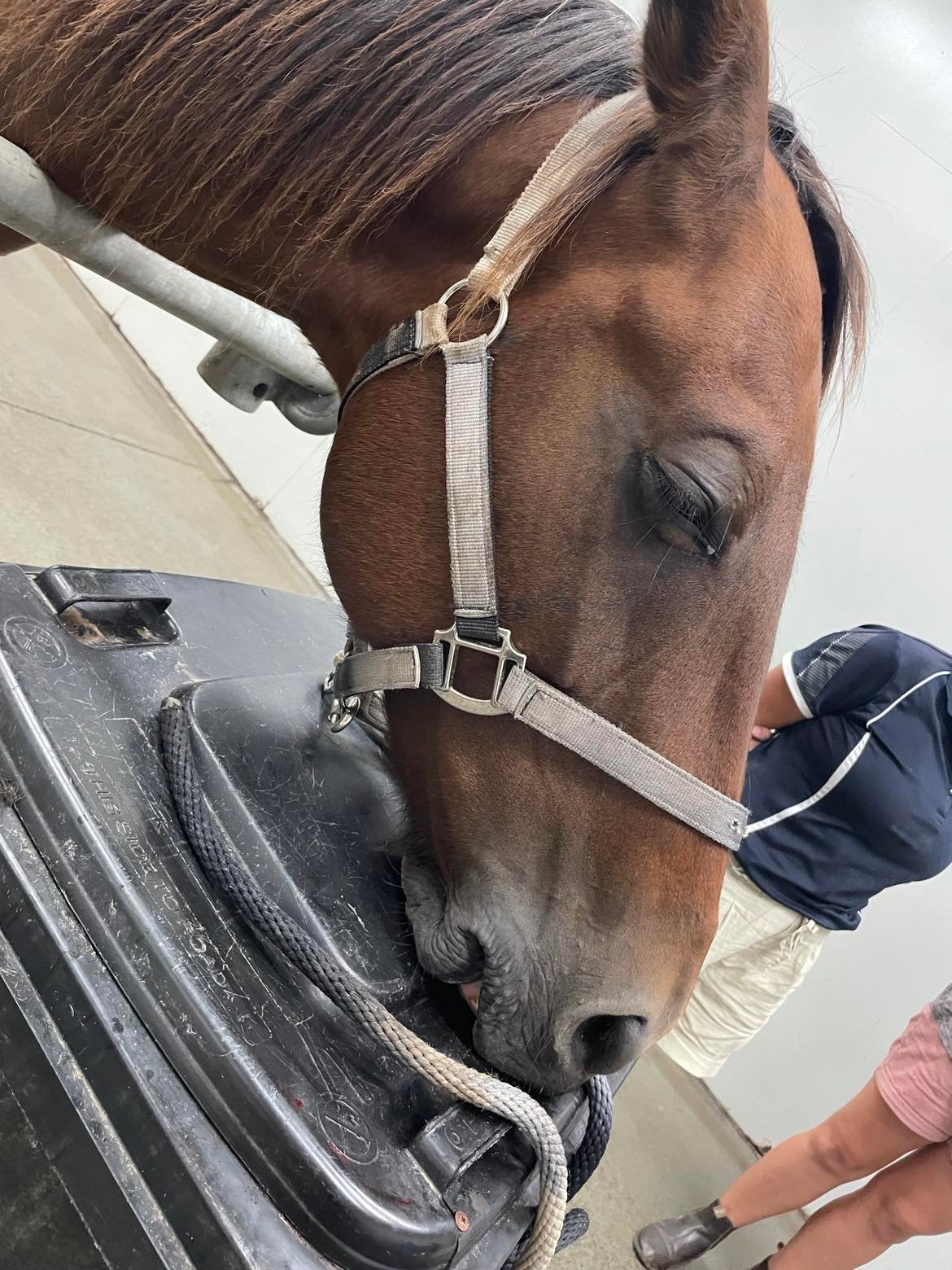
When was the last time you had fun with your horse?
After all, it’s the reason we want to work with them, right?
When was the last time you had fun with your horse?
After all, it’s the reason we want to work with them, right?
For so many Conflicted Equestrians, having fun with their horse is something that hasn’t happened in a while.
They have seen a behaviour that scares them, and they are reminded of that EVERY TIME they work with their horse;
They have experienced a situation with their horse and just aren’t sure what “went wrong”, so don’t know how to move past it;
They have started to feel doubt in their ability to work with their horse.
And it doesn’t matter how much you SHOULD know, how long you have been a rider or handler, or even how long you have been with your horse. It doesn’t matter if you had everything under control before the shit-storm. When you get stuck in the loop of doubt, fear, worry and anxiety, you bring conflict to your equestrian team - equally as much if not more than when your own horse brings those same feelings.
I have a confession to make. Recently, I had been considering if I need to take a break from horses. Yep, the Eccentric Equestrian Enthusiast Sarah has been genuinely and silently thinking about taking a good, long break from the ponies.
It started when some things didn’t go quite right while Gunner and I were levelling up. I side-tracked the level up instead of returning to where we were both comfortable - and that is when my own head got in the way. I was already feeling exhausted, and the internal conflict that kept happening in my head when I thought about riding was making me wonder if it was all really worth it.
But now I’m glad I didn’t go ahead with that break. So what changed?
I had fun with some no pressure, no “work” activity with Gunner.
By doing that, I remembered how much we enjoy being with each other. How quirky his personality is. How much we have both changed and grown together. How many skills I actually have…
All because of one simple in-hand adventure in the somewhat soggy back paddock. That was my reset moment.
So I have to ask you - when was the last time you hit reset on your relationship with your horse and just had fun? Share your experiences in the comments below!

Gunner and Sarah, having fun at the Equestrian Spirit Obstacle Course Day after hitting “reset” on their relationship.

The Personalities and Coping Mechanisms of Different Horse Breeds
Have you ever thought much about how your horses breeding impacts your interactions?
Each breed of horse was bred for certain characteristics and traits that make them good for certain disciplines.
With that comes their responsiveness, intelligence and coping mechanisms.
Within each breed is also variances of personality traits. For example, you could have a thoroughbred, notorious for being flighty and spooky, that is actually bold and confident (on the spectrum of thoroughbred behaviour).
Knowing how to utilise those default traits and use them when working together is key to avoiding conflict in your interactions. If you have ever seen a horse shut down, get frustrated, or lash out during work, this is a horse showing it is tired of being unheard and having an emotional response that is not desired - therefore, conflict.
Age, maturity, herd dynamics and their general environment also play a keen role in their emotional ability to learn and cope with the stresses our training inevitably results in.
The younger the horse the more they need a confident leader to show them how to navigate their experiences confidently. This is why generally it’s not recommended to have a young horse and a green rider.
Environmental exposures and life experience can be a tricky one for us as owners, because quite often we don’t know our horses’ history and therefore don’t know why they have particular triggers or things that set them off.
If our horse has had a bad experience before we got them they could be sensitive to certain things. For example if they had their ears or muzzle twitched to be handled they may now be head shy or have issues being haltered and bridled. If they have had an accident in a float previously they may be really resistant to going on floats. If they haven’t had a good backing experience they may have issues with being ridden that we don’t understand.
The breeds can be broadly categorised into their level of confidence and rsponsiveness, but each individual horses’ experience and personality can then change that. The following is a handy cheat sheet on the average breed traits, but should go hand in hand with what you already know of your horse.
Arabs
Arabs are bred for endurance and long distances. They are super intelligent as well, which is why they can get such a bad wrap for their temperament. They really don’t tolerate people not treating them fair and they are also fairly impatient of riders who aren’t particularly experienced. You really need to open a 2-way conversation with an Arab to get the best out of them (get some great tools to open the lines of communication in our mini-course here).
They don’t do well with being told what to do. The more work they get the fitter they get, so lunging them until they are tired doesn’t generally work - in fact, they can sometimes continue to use the adrenaline and run until they drop.
Thoroughbreds
Thoroughbreds (in my experience) are not quite as intelligent as Arabs and can quickly flip the switch, become silly and not process their stimuli well.
They can become unmanageable quickly given the right circumstances. They are bred to go fast for short periods of time. Mostly they haven’t been given the time to be trained as safe horses either and need a good re-education after their racing career for them to be safe for beginners.
Because they are so athletic they make good all-rounders - trained well, they excel in most disciplines. However there is a tendency for people to try and make a quick buck from them by giving them a couple weeks or months of training after racing and then sedating them to sell on. They also have potential racing injuries that can limit their performance. Given time, structure and stability in their training they can make excellent horses for looking after you, but when that doesn’t happen they get a bad wrap for how silly, spooky or agreesive they are.
Stock Horses & Quarter Horses
Stock Horses and Quarter Horses generally are quite intelligent, responsive and learn quickly. They also generally are quite reliable and not overly spooky because stock men need good reliable horses. The way they have been bred over the years means they have retained the traits that make good work horses with focus, concentration, an eagerness to learn and intelligence. They are also generally quite sure footed and sound.
The old cowboy method of sacking them out, however, can lead to these horses having a tendency to shut down instead of be responsive. This means we need to spend time getting them to open up and “speak” to us to avoid unexpected explosions of unwanted behaviour.
Warmbloods
Warmbloods have all the power and strength of the heavy horses, but can have some of the silliness of Thoroughbreds they can be crossed with, which can make for a handful of a combination for the inexperienced rider. Add to that they can easily be made sour in their training or go lame if pushed too hard too young to excel in dressage.
This, in combination with their athleticism, size and strength can sometimes make them quite difficult to handle. They generally have a calmer brain on them then the Thoroughbreds and learn a little slower.
If hacked out and given the opportunity to develop thoroughly and slowly they can be very relaxed and not easily spooked. A lot of them spend their training in the arena though and as such don’t get exposed to lots of different stimuli, so when they eventually do have to go out at competitions they can be overly spooky and sensitive to their environment.
Draught horses
These are our heavy horses such as Clydesdales and Percherons. Typically they are very bold and confident, and they aren’t easily spooked. However, because they are so bold and confident they also tend to be more argumentative and push handlers around (and because they tend to be heavier they can be REALLY pushy). If the trainer has handled them without an understanding of setting clear boundaries and just tried to bully them into submission, they can become nervy and sensitive.
They learn a lot slower - where an Arab will figure out what you want after a couple of repetitions, for these guys it may take quite a few rides. This means the trainers may get frustrated and take it out on the horse - again, making them overly reactive and sensitive.
Standardbreds
Generally speaking, Standardbreds have a fairly calm temperament but as with the Warmbloods, the more Thoroughbred they have in them the more spooky and difficult they can be. How they were handled during their racing career and how they were backed after will also play a role in how calm they are. As with the Thoroughbreds, they can also have underlying injuries from racing.
When looking to buy or lease your own horse, you want to find a horse that matches your temperament and personality, and that includes understanding the different characteristics and nature of the breeds and then figuring out where on the spectrum of flighty to bold that horse sits for that breed. Some people want a more active horse for the discipline they want to ride and can cope with a more intelligent horse that quickly tries to out think them, whereas others may need a slower moving, slower thinking horse for just weekend pleasure rides.
Understanding what you need from your horse, and pairing that with your horses emotional, physical and mental needs in training, will give you the best chance of success with your relationship with your horse.
Do you need support training your horse?
Take the quiz to understand what your horses unique personality needs in training (click here)
Treat training isn't a method you should use
There are a lot of people out there willing to tell you exactly what you should or shouldn’t be using when it comes to working with your horse.
Heads up, at the end of this, I’m also going to tell you what you should do. Some of you may even like it.
But I’m going to start with what you shouldn’t do…
There are a lot of people out there willing to tell you exactly what you should or shouldn’t be using when it comes to working with your horse.
Heads up, at the end of this, I’m also going to tell you what you should do. Some of you may even like it.
But I’m going to start with what you shouldn’t do:
treat training isn’t a method you should use
I’ll get to the reason behind my statement in a moment, but let me tell you where this comes from.
Recently, a question popped up into the Stronger Bond Community about the concept of using the treat training method - or more specifically, NOT to use it because it interferes with connection. This member had read it as a recommendation when working with their horse, and it didn’t sit quite right with her.
This is something a lot of our followers have expressed feeling. They get a lot of advice from experienced trainers, "specialised” trainers, or heck, even their friends, family and strangers at the pony club. And this sheer bombardment of information leaves them feeling overwhelmed, confused, or feeling like they are doing things wrong.
Sound familiar?
One of the end results to this is when we have experience a problem while working with our horse, we start remembering all those comments pointing out we are doing something wrong (even though it' might not be true), and this shatters our confidence in ourselves, the way we work with our horses, and our horse may soon follow us down that same path of lack of confidence.
And then the behaviours get bigger…
Don’t get me wrong. I can see when treat training can cause disruption to focus - some horses do become overstimulated and hyper excited. But does this mean it is true for ALL horses?
So here is my advice.
Don’t just use the treat training method (or not use it).
Listen to what your horse needs and use the right tool!
Did you see it? Treat training isn’t a method. Liberty isn’t a method. They are tools we use as part of communication and learning with our horses.
How you use those tools, what your philosophy and values add up to - that is what makes your method.
Let’s take a quick peak at the Holistic Horse Handling Method, which we at Equestrian Movement use, teach and live by.

The Holistic Horse Handling Method
This diagram outlines our key focuses when it comes to handling our horses. And the end result is always the same, even if the steps vary between horse to horse and handler to handler.
Connection
Our values line up so that we become leaders worth following (instead of arguing, we listen), horses that what to work and enjoy learning (willingness), and support their emotional coping mechanisms through the miriad of stresses we inevitable impart onto our horses.
Notice that there is no reference to tools in that diagram. Because the tools we use to reach the end result may differ. But the end result is always the same - horses that have Faith, Trust and Confidence in their handler, and handlers that have Faith, Trust and Confidence in their horse.
The ultimate goal, right in the centre of it all, is psychological safety. Where our horses feel comfortable to express their requests, worries or opinion (without the loud and scary behaviours) and their personality can shine - and so can you and yours. It’s about safe horses that enjoy working with us, and we enjoy working with.
Psychological Safety = The Powerfully Connected Equestrian Team.
So the treat training method isn’t a method you should use, because it isn’t a method. And the next time you find yourself being told you should do xyz, ask yourself (and feel free to ask our community of supportive equestrian for their own experiences):
does this feel right for me
does this feel right for my horse
is this a tool worth investigating
Don’t doubt your skills, or worry that you are doing something wrong. Listen to your horse and your values, and learn to adapt to meet them both.
Trust me, your horse will love you for it.

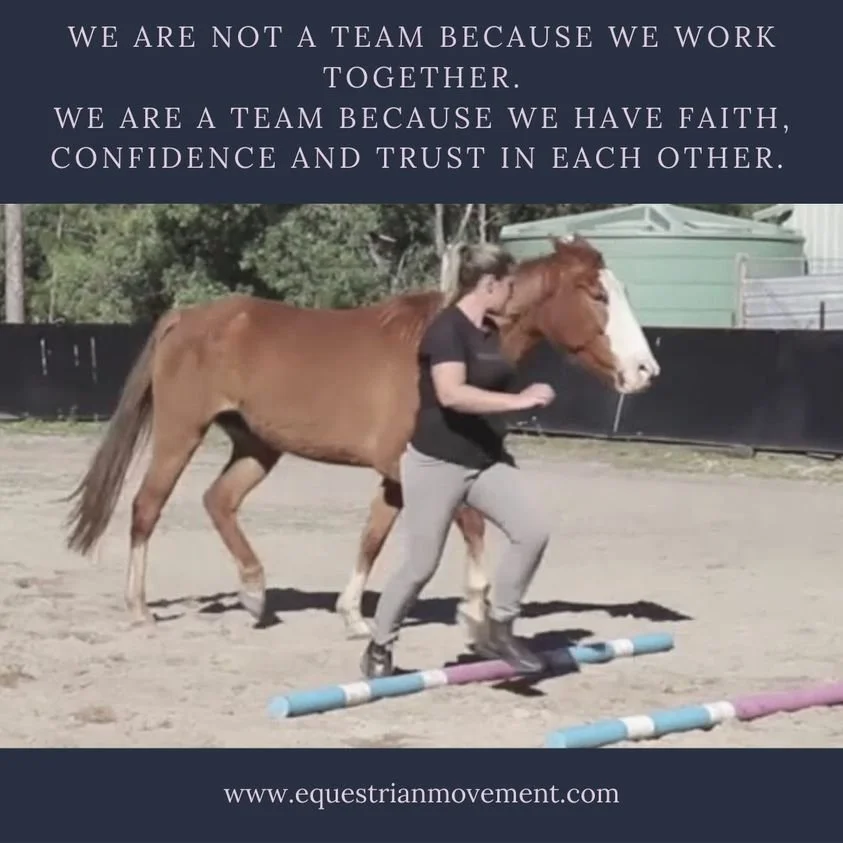
The Powerfully Connected Equestrian Team
We aren’t a team with our horse just because we work together…
Are you trying to build a beautiful, deep connection with your horse that allows you to work together in harmony, happiness and for the health of each other?
We can not be that team with our horse just because we work together.
We become that team because we both have faith, trust and confidence in each other.
When we are using holistic horse training skills, some of our key values are:
secure attachment (does your horse feel safe to be vulnerable around you ie. relax); and
psychological safety (are you creating an environment your horse feels safe to learn and engage in)
If we want to create safe, kind horses that want to look after us, these are our foundations to help ourselves ask:
Are my actions in alignment with these values?
Picking a training method that works for you, your horse and your overall team dynamics can sometimes feel like wading through murky waters, which is why I return again and agian to this question.
Do you need help to become the Powerfully Connected Equestrian Team?
Look at our free Building Connections Course to get you started!
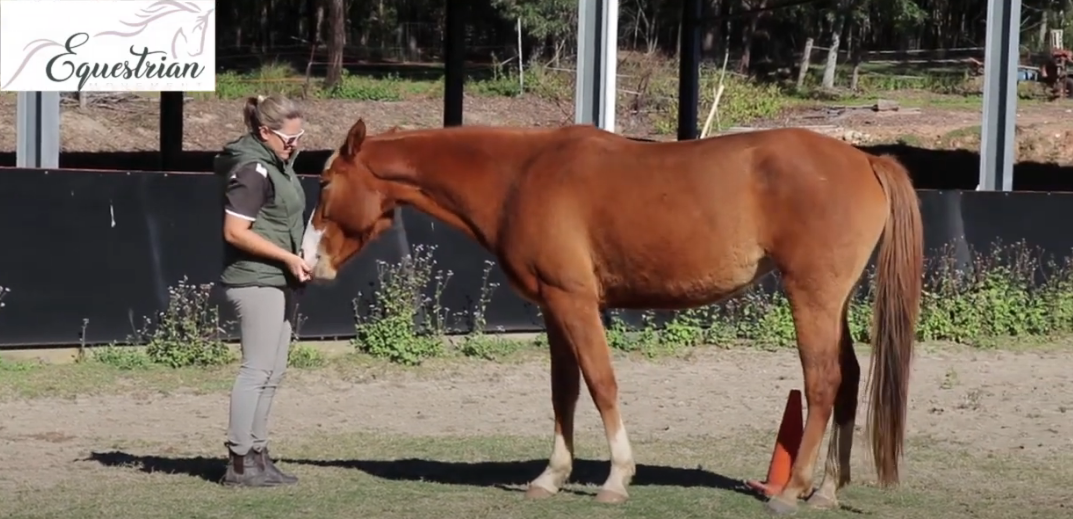
One thing you probably HAVEN'T been taught...
There is one BIG rule in horse training that can either make or break your horse and your connection.
There is one big rule in training that can either make or break a horse.
Done well, we can create soft, kind horses that know how to look after their riders.
Skipped, either because the training process was rushed or the trainer also didn't understand this principle, it can break our horses confidence and trust in humans and create dangerous horses.
That one thing that is often missed that can ruin horses is teaching your horse to how to learn.
In this video I'm sharing one of my favourite tools for just that.
Games are an excellent way to help horses learn without pressure (not to mention fun, too).
Learning with Games lays out step by step process, demonstration and troubleshooting when our horses struggle with the emotional regulation that comes with learning.
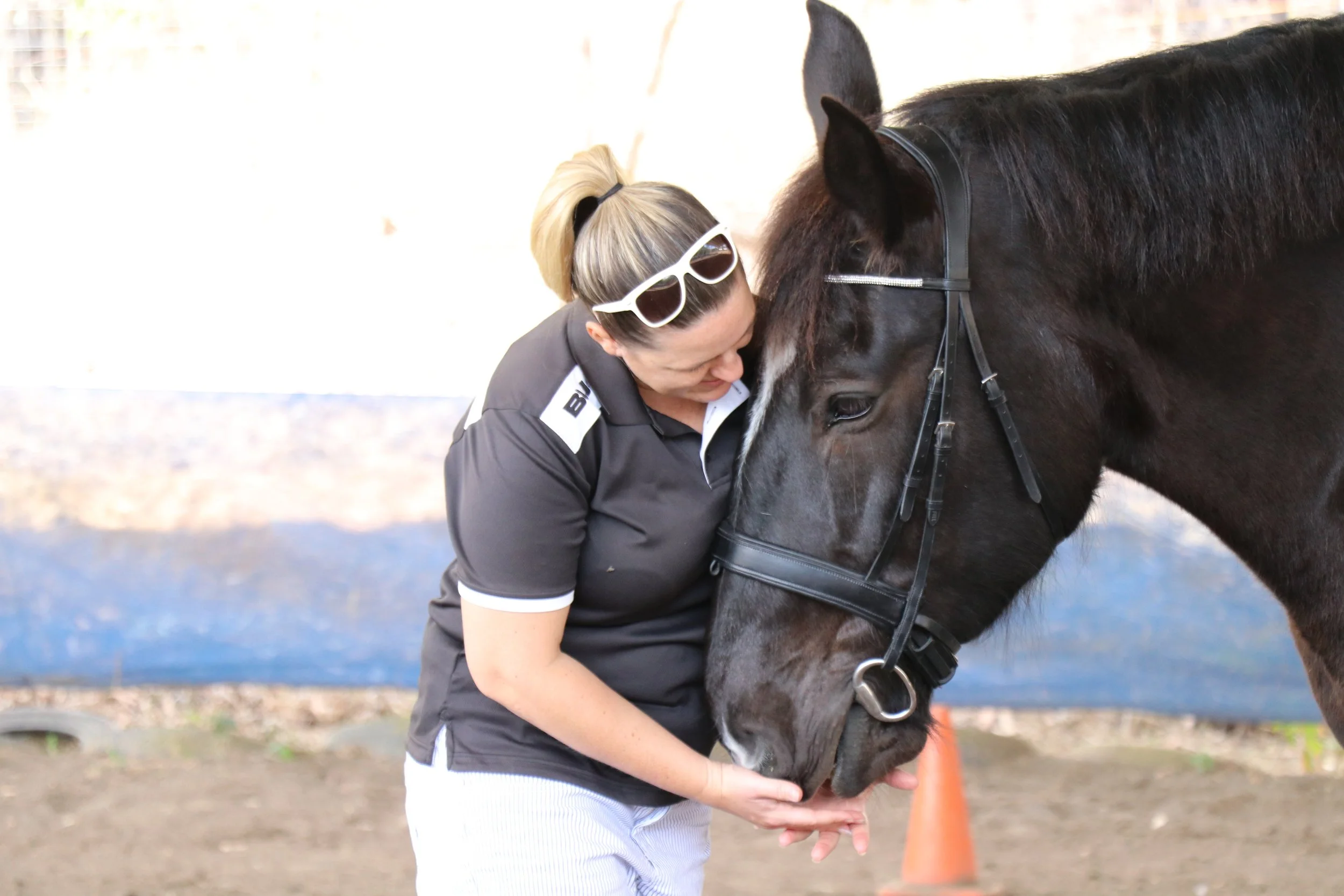
The secret behind stubborness
There are very few behaviours more frustrating than stubborness.
Stubborness is soooo frustrating. Nothing makes us feel less “in control” than an animal that is at least 5 times our bodyweight that just WONT.
Despite that feeling of frustration (and I won’t go into control, because you probably know my thoughts on it), it can be super rewarding when your horse finally consents to your ask - if you do it right.
Here is the big secret: Stubborn behaviour is a form of a NO. It is your horse stating they lack the faith and confidence in you as a leader to follow your ask. When you think about stubborness in that way, can’t you just feel that frustration slipping away?
One of our lesson plans in our online groundwork program (the Holistic Horse Handling Program) is CHOICE - you can watch Sarah and I practicing choice with our very stubborn Australian Draught Horse, Gunner.. We found Gunner rather liked the feather duster, but he also preferred to the dressage whip for cuing communication.
We do a lot of work around consent, relaxation and positive reinforcement when cuing with our tools so that we can build psychological safety for our horses into our training and training tools. Choice can really help those more stubborn ponies feel involved and allow you both to work together with faith, trust and confidence in each other.
Plus, choice and games are always good for participation from the horses!!
All that and more is available in the Holistic Horse Handling Program.
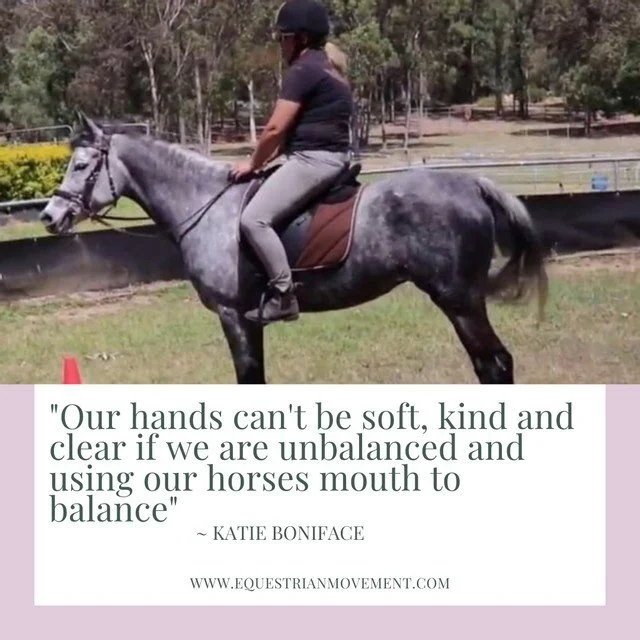
Hands that are soft
Our hands can't be soft, kind and clear if we are unbalanced and using our horses mouth to balance.

Our hands can't be soft, kind and clear if we are unbalanced and using our horses mouth to balance.
They also can't be soft kind and clear if we are lacking the coordination, preparation and forward thought to move smoothly in to our figures.
The first thing I work on with my students is to be strong, secure and balanced over their lower leg so that they can rise out of the saddle into 2 point seat and seat gently in to the saddle like a squat without grabbing anything. I want to see this in walk, trot and canter.
Second to this, once they are balanced over their lower leg you need mobility of the upper body. We turn with our shoulders not our reins. I also want both horse and rider to be confident working with and without contact with the mouth. This helps build trust in each other and helps the rider understand that the reins don't control the horse.
When backing young horses we are looking to start a language with them. The reins are a word the word is "follow". I will mostly work without contact when I'm backing a horse unless I'm asking for a turn or a halt. We have also had this conversation on the ground in hand, so the horse should be confident in this language on the ground before we move to the saddle
Want to know more? Listen to the podcast on Hands Your horse can trust
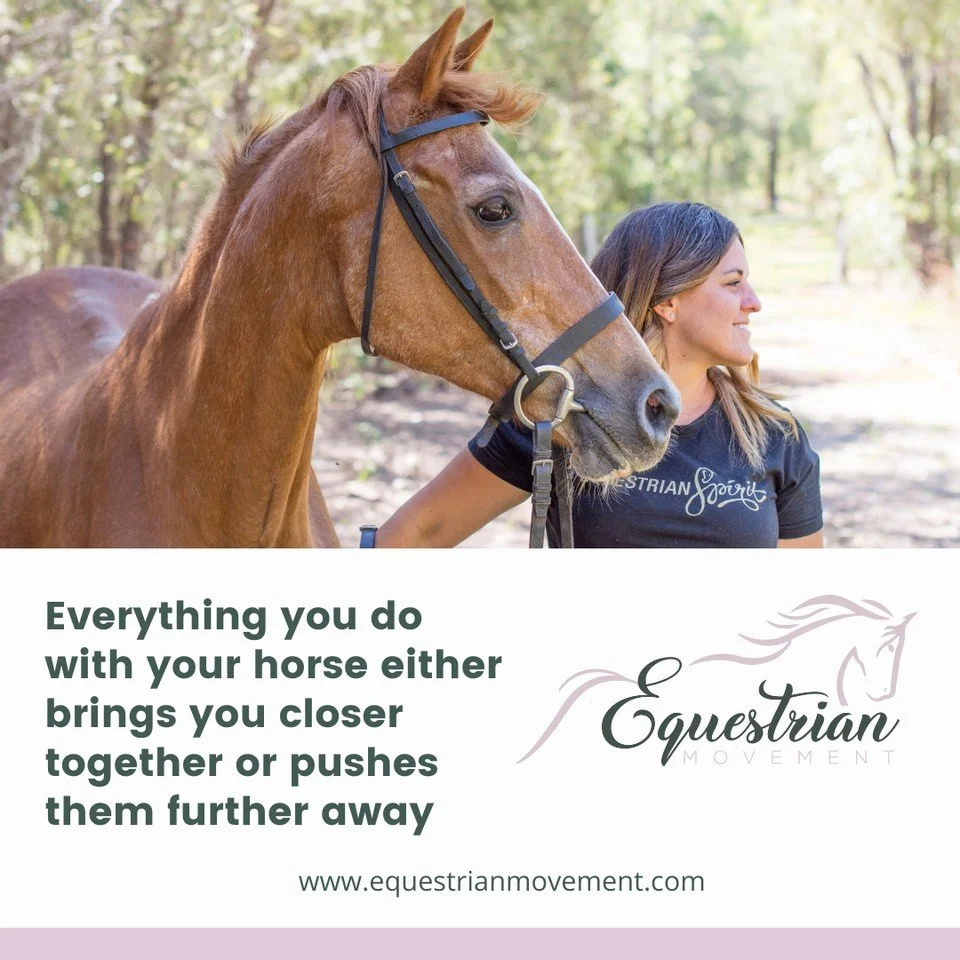
Make or break it: psychological safety
This is an aspect of first do no harm that I have been trying to find the words to explain. Taking it slow, being cautious and not being naive to the situations you put yourselves in to is best for the horse and other people that may end up unintentionally involved.
Everything you do with your horse will either offer psychological safety and build faith, trust and confidence or break it.
There is one time in particular that I broke the trust I had been building with Fitty.
When I first got him I wanted to ride him up the road to another property that had an arena. I didn't think anything of it but thankfully decided to do it in hand just in case. The further down the road I got the more he was starting to panic at the cars and trucks that were coming past until he couldn't control himself anymore. He started rearing to pull away from me and run home. He is a big strong horse but letting him go would have been an absolute disaster for himself and for the cars on the road. We were already past half way at this point so I thought safer to push on and get to our destination.
So everytime there was a break in the traffic I would run him to the next driveway and we would go in a bit to get away from the noise of the traffic where he would be less stressed until we safely got to the property we were trying to get to. This friends, is what we affectionately call at the barn the "S4!t show".
And it inevitably happens at one point or another. People who have had horses for a long time know about the S4!t show and try to protect new riders or new horse owners from it. But that can mean they feel held back and don't understand why they are being told they can't do something. The s4!t show is a right of passage to becoming a true equestrian. Not naive to how sideways things can go anymore we make better choices on the situations we put ourselves and our horses in to.
So when I see students not have the nous about them to be able to pull the horse off grass, ride with balance and be able to lead so that the horse follows, I will not let them leave the safe controlled environment.
This is an aspect of first do no harm that I have been trying to find the words to explain. Taking it slow, being cautious and not being naive to the situations you put yourselves in to is best for the horse and other people that may end up unintentionally involved.
Listen to the connection series podcast to learn more about psycological safety

Eye Contact - an important pillar in developing awareness of your connection with your horse
Paying attention to where our horses focus and attention is and being some one to our horse that they look to for guidance helps deescalate and stop our horses spooking, running around like a kite on a string and running over the top of us
Our number one tool for establishing quality of connection with your horse is demonstrated in this video!
And it’s as simple as eye contact!
Paying attention to where our horses focus and attention is and being some one to our horse that they look to for guidance helps deescalate and stop our horses spooking, running around like a kite on a string and running over the top of us. Setting expectations with our horses for focus, attention, concentration and relaxation helps to set them up for success when we are ready to put our horse in to a more scary environment or experience.
Making sure both ourselves and our horses have the tools to know how to deal with their fear before we put them in to scary situations is key to confident horses that have trust and faith in their horse trainer, handler or owner.
Eye contact falls under the horses ability (and your own) to broaden your relationship, communicate and connect. It is one of the important pillars in the three components that make successful, harmonious training with your horse and helps set you up to becoming the powerfully connected equestrian, by eliminating the arguments, fear, worry that you are going to hurt one another and the confidence to move forward as a solid team.
Learn more about setting yourself up for success inside the Holistic Horse Handling Program
Looking for more specific content?
Have a question you are seeking answers to? Send us a message and we will create a blog!