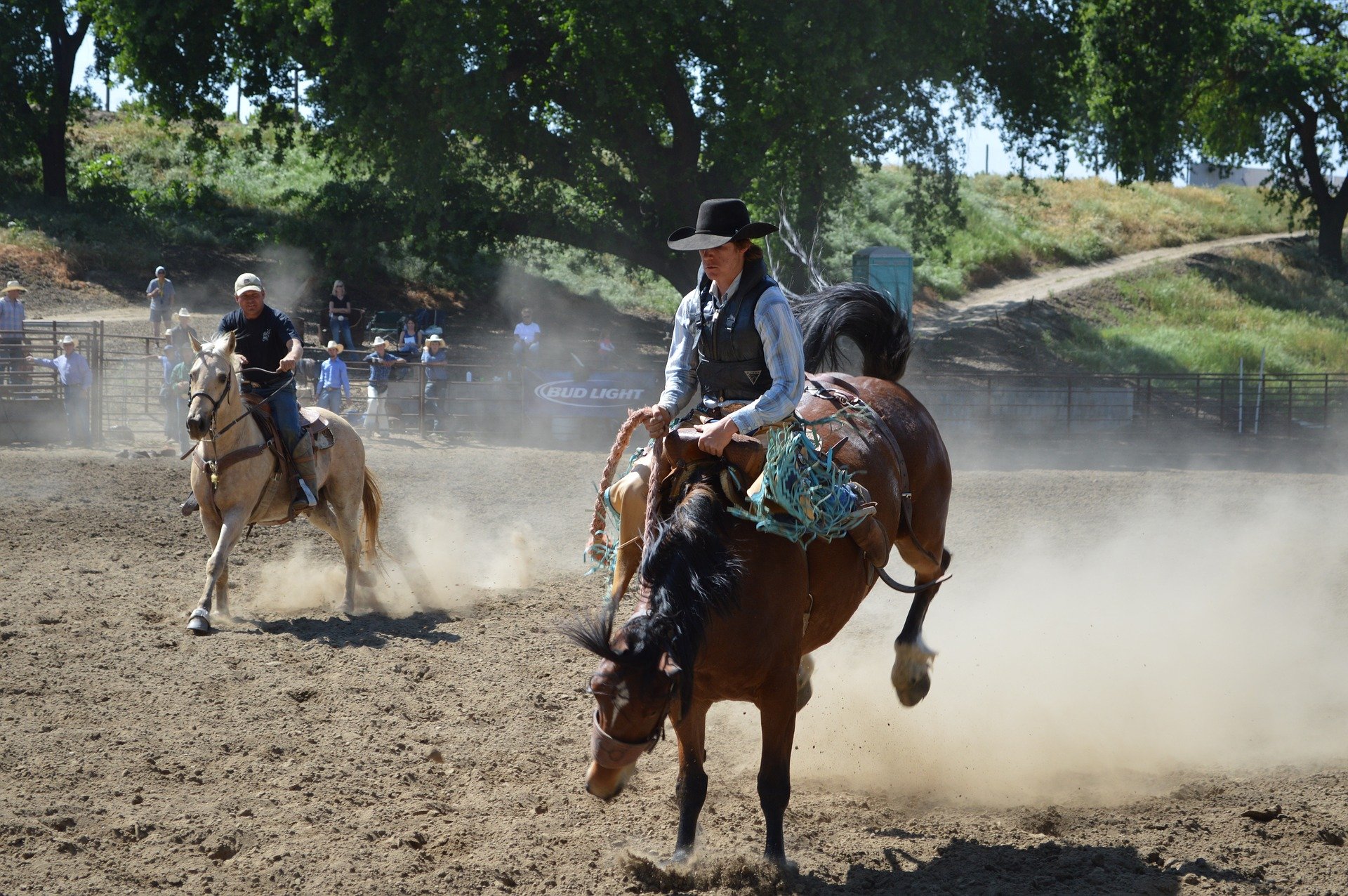
Are you strong enough for your horse?
A lot of well meaning equestrians come to me with big behavioural issues thinking the problem they are having is they aren’t strong enough to man handle their horse, their not brave enough to buck out their horse.
A lot of well meaning equestrians come to me with big behavioural issues thinking the problem they are having is they aren’t strong enough to man handle their horse, their not brave enough to buck out their horse.
They want to know how to deal with their fear and make their horse behave itself.
Is this you?
The big mistake they are making is that they are thinking leadership is a show of strength and power. You horse doesn’t need you to be the boss but they do need you to lead with confidence so that they can follow. If they think you cannot lead with confidence and give enough direction for them to succeed at meeting your expectations of a “well behaved” horse then they take the lead and horses don’t make good life choices for humans.
There is one caveat here - that what you release for, you reinforce.
So if you ask you horse to do something they don’t want to do and they don’t respond the way you wanted them too and then maybe you’re feeling scared or confused and conflicted on how to get them to actually do it because you have released the pressure for the behaviour you didn’t want you have cued that behaviour in to that ask.
So part of being a leader for your horse is trying to ask things of your horse where you aren’t over facing them or yourself or tipping them over threshold. This in itself is inevitable, we will do it by accident so its important that when we break that confidence and trust in us we find a positive note to finish on, take the goal off the table and focus on rebuilding the trust and confidence between horse and rider.
The only way to reach those big audacious goals you have set for yourself and your horse is by building and strengthening your confidence and trust in each other.
And that’s why the second pillar inside the Holistic Horse Handling Methodology is Compassionate Leadership skills.
Who do you have to be for your horse to have confidence and trust in you and what you are asking of them? Who do you have to be to be comfortable giving your horse direction and your horse seeking it from you?
Have a gap and want to become a compassionate leader?
Connection training is still training
Not every training session has to be physical conditioning and performance.
Not every training session has to be physical conditioning and performance.
Our emotional agility skills and relaxation skills are still work. The better we are at getting our horses in to deeper states of relaxation the better we can achieve mental relaxation and relaxation and swing in the saddle.
Physical relaxation exercises like long and low aren't just about cuing. They are getting the horses to mentally relax so that their physical bodies can also relax.
Learn more about connection building with Equestrian Movements free online training course Building Connection
Does your horse trust you?
You love your horse but you have this nagging feeling something isn’t quite right.
A lack of eye contact, reduced willingness, increased signs of stubbornness or resistance is all you are greeted with - despite how hard you try!
You love your horse but you have this nagging feeling something isn’t quite right.
A lack of eye contact, reduced willingness, increased signs of stubbornness or resistance is all you are greeted with - despite how hard you try!
Why doesn’t my horse trust me?
Here is the thing - the “standard” response to these issues in the equestrian world is to “Just push them through it”.
But just pushing your horse through resistance is the worst thing you can do to build confidence and trust in each other. If you are a horse rider struggling with your horses stubbornness, resistance or difficult behaviours it is likely you have been told to just push them through it, show them who’s boss and make them do it.
Without knowing what your horse is trying to communicate when it is showing this resistance, you will have the same problem as most conflicted horse owners and riders, where the resistance and arguments get bigger. The horse starts giving bigger behaviours that result in you being scared to work with your horse. You lose trust and confidence in yourself and your horse and your horse loses trust and confidence in you. Your horse becomes a glorified paddock ornament and you become riddled with guilt.
”Maybe I haven’t done enough” even though in your heart you feel like you have no more to give.
“Maybe I’m not good enough and my horse needs a better rider” even though in your heart you really want to make it work you just wish it could be easier.
Maybe you’ve tried sending away to different trainers, working with different instructors and still you feel like you aren’t enough. The problem is consuming your thoughts, keeping you up at night. You fear what will happen to them if you “give up on them”. What future do they have? Will they be safe? Will they be cared for? Will they be loved?
It doesn’t have to look like this.
You can be enough.
What a lot of trainers, coaches and breakers fail to communicate (or sometimes even understand) is that being a good rider and a good human for your horse isn’t about how well you can sit a buck and man handle you horse. The purpose of pressure is not to try and control our horses but to communicate.
The operant condition skills of pressure/release (aka negative reinforcement) often used in natural horsemanship is just one tool of so many in the tool kit of the holistic horse handler. It is a tool for communication, not control, and one piece of the puzzle in how we lay out our shaping plan for our horse.
And if it doesn’t work, the holistic horse handler knows how to reflect on what worked and what didn’t and adapt, use the plethora of other tools we have to communicate with our horse.
What we want to break it down to is:
How are we going to guide the horse in to the behaviour we desire?
How are we going to mark that that is the desired behaviour?
How are we going to motivate them to do it again?
Not all horses like pressure to guide their behaviours (especially young, green or confident/self assured horses) Not all horses find the relief from pressure a strong motivator to do the behaviour again. And if you are trying to use the pressure to control the behaviour, rather than guide or shape it, you will miss the timing that communicates to the horse they got the answer correct.
And these is what our holistic horse handling students are learning how to do. Our program provides an expansive tool kit of different ways to work with different horses to adapt the how to best suit and achieve a willing horse with an array of options to trouble shoot problems that is constantly updated as we have new problems pop up.
So if you’re ready to feel like a confident and connected equestrian, no longer overcome with confusion, guilt and feeling conflicted about “how” you will get your horse to behave, check out the Holistic Horse Handling Program by clicking the button below:
How to get a soft halt from bit pressure - Holistic Horse Handling training
In this video I share with you how I work on getting a soft halt through bit pressure cuing.
In this video I share with you how I work on getting a soft halt through bit pressure cuing.
Love our riding and groundwork tips? Don't forget to subscribe to our Youtube channel
Alternatively, get these training delivered to your inbox every week by subscribing below!
3 easy exercises to improve your horses fitness
In this video I'm going to share with you 3 of my favourite and easy exercises you can do with your horse that will improve their work today without even having to tack up.
In this video I'm going to share with you 3 of my favourite and easy exercises you can do with your horse that will improve their work today without even having to tack up.
These exercises have focuses in some of our key riding areas:
get our horses to flex into their hocks for the half halts,
acceptance and seeking of contact,
shortening and lengthening the stride,
establishing rhythm and balance in working paces and
relaxation and swing
as well as starting to get our horses eye in for their take-off point when jumping.
Who would've thought we could've covered so much on the ground!?!
Love our tips?
Don't forget to subscribe to our channel, or get these handy tips straight to your inbox by filling in the form below:
Easy exercise to improve steering your horse with your legs.
Wanting to be able to steer your horse from your legs?
Wanting to be able to steer your horse from your legs?
This is an easy exercise I use for my beginners to teach them how to start clearly cuing leg is a word the word is "away from".
Want more tips like this in your inbox?
Join the movement for healthy horse training below (and don't forget to check out some of our courses)
What does it take to be a good horse woman?
One of the biggest mistakes horse woman make is thinking that they aren't good enough because they can't do xyz yet.
One of the biggest mistakes horse woman make is thinking that they aren't good enough because they can't do xyz yet.
Most horse women will think things like, "when I can canter through an open field I'll be good enough" or "when I can jump I will be good enough".
Or they might be thinking "I can't navigate this gate obstacle so I'm not a good enough horse woman" or "I can't get my horse to do xyz".
And I'm here to let you know that if your career as a horse woman is a checklist of all the things you can make your horse do, you will never feel good enough and you have missed the point.
Being a good horse women is being someone your horse feels safe to relax with, someone your horse seeks for direction, someone who comfortably and confidently supports their horse as they navigate challenges, someone who takes the time to ensure they are clearly setting up their communication skills with their horse so that their horse confidently knows what they want. Someone who doesn't put their personal goals ahead of the physical, mental and emotional wellbeing of their horse. Someone who is ok with taking the pressure off and reflecting when things aren't going well so that they can make a plan for their horse and try again in a way that sets their horse up for success.
Are you ready to put your relationship with your horse first? Check out our free connection training by clicking the button below
How do I train my horse for acceptance of contact? (Part 2)
Part 2: How can you teach your horse to seek the contact for direction and seek acceptance of contact if we are training them to seek release of or relief from pressure?
How can you teach your horse to seek the contact for direction and seek acceptance of contact if we are training them to seek release of or relief from pressure?
You can't. Submission to the bit is the biggest reason why your horse isn't working in true self carriage and are going lame in work.
There's a little secret that I share in this and next weeks videos. If you are ready to start the journey to creating the compassionately connected team of your dreams with your horse? Check out our free training by clicking the button below:
How do I train my horse for acceptance of contact? (Part 1)
How can you teach your horse to seek the contact for direction and seek acceptance of contact if we are training them to seek release of or relief from pressure?
How can you teach your horse to seek the contact for direction and seek acceptance of contact if we are training them to seek release of or relief from pressure?
You can't. Submission to the bit is the biggest reason why your horse isn't working in true self carriage and are going lame in work.
There's a little secret that I share in this and next weeks videos. If you are ready to start the journey to creating the compassionately connected team of your dreams with your horse? Check out our free training by clicking the button below:
Does your horse know how to seek the release of pressure?
When we are building in cuing and language, pressure/release or negative reinforcement is quite often the tool used, especially once we are in the saddle.
When we are building in cuing and language, pressure/release or negative reinforcement is quite often the tool used, especially once we are in the saddle.
The problem is that the motivation for the horse to follow our aids is relief from pressure. How scary, uncomfortable or painful does a pressure have to be for your horse to seek relief from it?
What we really want our horses to do with pressure is to seek it for direction.
So if I have a new student enquiry for a behavioural issue, after ruling out pain related issues, quite often it is a relationship to the use of pressure as a training tool that is creating the behavioural issue.
If you main motivation to perform a task was for relief from anywhere from mild discomfort to pain, how motivated would you be to seek the answer and engage willingly?
When we focus on the quality of relationship, we can understand our horses better and delve deeper into what truly motivates them.
If you're ready build the relationship of your dreams with your horse, check out our free connection training.
Why does my horse rear? (Part 4 of a 4 video series)
Working with a seemingly confident and happy horse that had taken to rearing, we spent one session implementing the foundation skills of the Holisitic Horse Handling Methodology. In less than 30 minutes, we saw that this stoic boy was worried, in pain and unable to put his trust into people - the underlying cause of the rearing.
Working with a seemingly confident and happy horse that had taken to rearing, we spent one session implementing the foundation skills of the Holisitic Horse Handling Methodology. In less than 30 minutes, we saw that this stoic boy was worried, in pain and unable to put his trust into people - the underlying cause of the rearing.
Helping our horse to seek connection, relaxation and build confidence in ourselves helps us identify when our horse is really struggling, as opposed to having a stoic horse suddenly rear for seemingly no reason.
So if you are ready to start building that connection with your horse, pop on over and access our free Building Connection course
Why does my horse rear? (Part 3 of a 4 video series)
Working with the same horse from last weeks video "Why does my horse rear? (Part 2)", you can see that the implementation pillars within the Holisitc Horse Handling Methodology of "Safe, secure & connected" along with Compassionate Leadership is allowing me to further investigate some of the underpinning reasons this horse has taken to rearing.
Working with the same horse from last weeks video "Why does my horse rear? (Part 2)", you can see that the implementation pillars within the Holisitc Horse Handling Methodology of "Safe, secure & connected" along with Compassionate Leadership is allowing me to further investigate some of the underpinning reasons this horse has taken to rearing.
Taking some time to do this kind of connection and relaxation work allows us to further the conversation and begin to identify the root of the behaviour, as opposed to applying a bandaid (that is likely to be ripped off in a dramatic way).
And if you are ready for this quality of relationship where you can build a conversation with your horse to uncover concersn, rather than having to fight, bully, submit, push and argue with your horse for every little thing, you definitely want to check out our free online connection training Building Connection:
What is Polyvagal Theory?
Polyvagal theory is based on what we understand about one of the big nerves that come out of the brain, the vagus nerve.
Polyvagal theory is based on what we understand about one of the big nerves that come out of the brain, the vagus nerve.
The vagus nerve is called the wandering nerve because of how long it is and its far reaches throughout the body. The vagus nerve is responsible for a state of being termed rest and digest and the social engagement system. A lot of people have heard of the flight, fight or freeze mechanism but not so many rest and digest and even less the social engagement system but this is what the poly vagal theory is in reference to.
Fight, flight or freeze
Back in the day when our biggest threat was surviving predators an unconscious system was hard wired in to our body to respond unconsciously, in a way without thinking to run, fight or freeze to give us the best chance of survival. So image the tiger coming to get us. All functions not required to escape the tiger are moved down in priority. So digestion, sleeping are down regulated, the digestive juices turned off and blood flow redirected to muscles, heart and lungs for running or fighting.
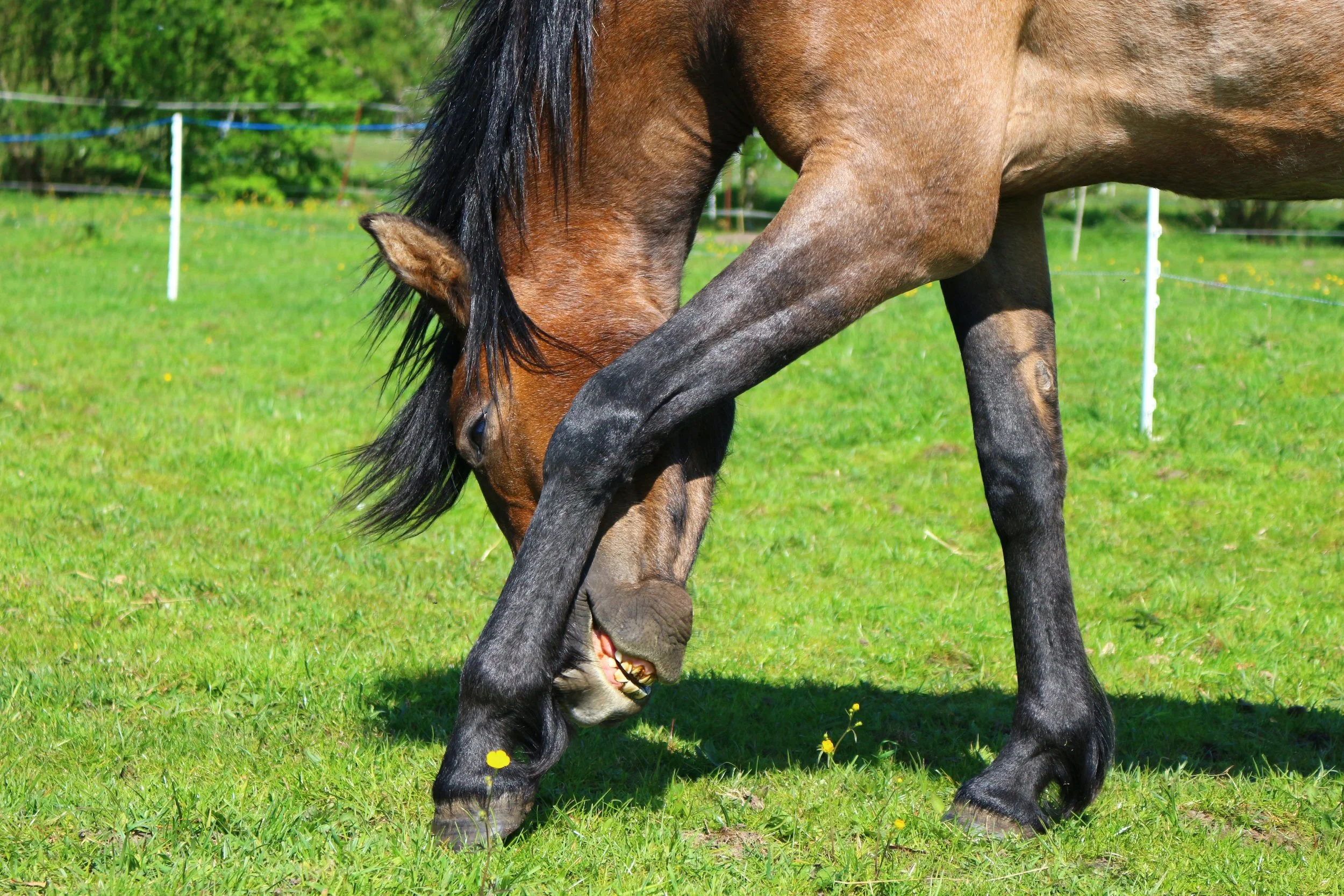
Relaxation cue in progress
We either escape the tiger or get eaten.
Rest and digest
We escaped the tiger, we found a cave or tree and we live to fight another day. Our body relaxes. We are safe to eat, safe to sleep. We can recharge and be ready for the next time we have to fight the tiger.
So why is this important in training?
1. Our horses are prey animals and primed for flight. They unconsciously react to their environment, the snap of a twig, the rustle of the leaves like it could be hiding a tiger.
2. We don’t want them to think WE are the tiger!
What often ends up happening in training is that trainers toggle from relaxation up to flight and back down to relaxation. We don’t want our horses so relaxed they are asleep but we don’t want them spooking at every noise, every rustle and bolting with blind flight.
So trainers use tools to spook reactivity and then calm the horse and then spook reactivity and then calm the horse. Think flags and join up.
Or they pick the fight and then win the fight and then pick the fight and then win the fight. Think submission based training, push them through it, make sure they know you are boss.
Or they flood the horses nervous system so that they go in to freeze, shut down or dissociative state. Think desensitisation, sacking the horse out or bucking them out.
But there is another option. And that option is our social engagement system. Poly vagal theory is mostly about the social engagement system.
What is the social engagement system?
It is a branch of the nervous system that lights up our facial expression. It is also responsible for self expression and reception of verbal communication, guiding the rhythm and tone of your speech. It enhances your ability to listen to other allowing you to pick up on emotional nuances within communication. The vagus nerve also links the heart to the muscles of your face increasing your empathic engagement in responses.
So think about going out to dinner with friends. You’re relaxed but you’re not asleep. You have energy, self expression and engage in conversation with your friends. It feels good, you connect. We are upregulating the nervous energy with social engagement. Being around people we enjoy.
We can bring this to the training environment. We don’t have to upregulate our horses nervous energy through fear we can unregulate their nervous energy by doing things they and enjoy and being someone they enjoy being around.
And this is what we do in our Holistic Horse Handling Program.
We learn how to watch and read our horses body language to be able to tell what part of the horses nervous system is unconsciously triggered or activated in response to our lesson plan and we work to first get them downregulated in to a deep state of relaxation and then upregulate with games and focus in to work with an immense sense of task achievement (aka dopamine hits).
I find that engaging our horse in training this way is the best way to get true willingness and get a horse that enjoys learning, knows how to look after their human and asks to be ridden.
interested in joining? Next round of enrolments are happening again soon - join the waitlist to be privy to a special early bird offer!
Why does my horse rear? (Part 2 of a 4 video series)
I've been invited out by a student struggling with her rearing horse.
So I'm going to share some of the insights of the very first meeting of this horse, while I implement the Equestrian Movement Holisitic Horse Handling Methodology to assess the emotion behind the behaviour of rearing.
I've been invited out by a student struggling with her rearing horse.
So I'm going to share some of the insights of the very first meeting of this horse, while I implement the Equestrian Movement Holisitic Horse Handling Methodology to assess the emotion behind the behaviour of rearing.
Warning - it's not going to be a flashy video of me sitting through a broncing episode until he stops. I will not sit on a horse until I know they feel safe and relaxed, not only take direction well from me but are also seeking direction from me and are also consenting and even better inviting me in to the saddle.
BECAUSE if I have a horse that does not feel safe with me, does not seek direction from me, does not have trust and confidence in me, does not take direction well from me and/or does not want me on their back..... why would I want to sit on them!?!?!?!
Sure I have done this a bunch throughout my training career but I just refuse to work like that anymore and do it to the horses, so if that is what you were hoping to watch, you're on the wrong channel.
BUT, if you are ready for this quality of relationship rather than having to fight, bully, submit, push and argue with your horse for every little thing, check out our free online connection training.
Learned Helplessness or Shut Down - what's the difference?
These two terms are sometime used interchangably but it is important to recognise the difference.

These two terms are sometime used interchangably but it is important to recognise the difference.
Learned Helplessness
Learned helplessness is created when the horse after repeatedly trying to escape a painful or aversive stimulus cannot escape.
The horse finds a state of acceptance or tolerance for this now being its experience. They stop trying to escape. Even when an opportunity for escape is presented they no longer try. They can’t escape, they stop trying there is an acceptance.
In studies done on learned helplessness there was less of a stress/cortisol response in people when they could control the pain/aversive stimulus then when they weren’t in control of it.
Learned helplessness sees after all attempts to get away from the pain or the aversive they give up and accept the experience even when an exit is presented.
Shut Down
Shut down is an internal state of dissociation, our freeze response when threatened. This can be brought on by learned helplessness or can be experienced any time the horses perceive a threat they cannot run or fight their way out of. It is an adaptive mechanism helping us be ready to fight or run again. There is a state of dreaminess where no pain or terror is felt in humans that go in to the shut down state even though they are conscious of what is happening.
When in a shut down state, the nervous system believes we are in a life threatening situation and staying still is what is going to keep us alive. It is similar to a dissociative state where you aren’t fully experiencing the now and in your body to help you best to get through the experience.
Learned helplessness was originally described as an experiment on dogs and it is important to recognise we can unintentionally recreate environments for both states of shut down and learned helplessness in our horses.
Because… We are in control of everything that happens to them.
Where they live, how they live, who they live with, where they eat, what they eat, if they eat, if the vet needs are met. Whether you want to believe it or not, we are in the position of power for with our horses. And they cannot escape if they wanted to. They may escape the paddock or be moved to more humans, but they are always in the care of humans and at therefore at their mercy.
This means we need to be very intentional about how we use this power balance. You don’t want to use punishment for an expression of personality or pain. You want to ensure your horse feels safe with you and that you are not the threat. You want your horse to have trust and confidence in you to keep them safe from other threats. And in this way we can show up for our horse as a compassionate leader. Someone they turn to for direction and support when they don’t know what to do.
When we can comfortably give our horse direction and they can seek it from us that is when we get to see our horses true personality and willingness. Not the version of our horse that feel unsafe or threatened. Not the version of our horse that doesn’t have trust or confidence in the choice we make for them. Not a horse that we have to push, bully, coerce or manipulate into performing party tricks for us but true connection.
This is the purpose of the Holistic Horse Handling Program. How can we show up for our horses as a compassionate leader? It is in our education of our training tools and shaping plans and our ability to navigate relationships that build trust, confidence and connection. If we didn’t love the emotional aspect of this work we would ride motorbikes
Why does my horse rear? (Part 1 of a 4 video series)
A rearing horse is a common reason people reach out to me at Equestrian Movement.
A rearing horse is a common reason people reach out to me at Equestrian Movement.
And I get it, rearing is a scary challenge to face.
In this video I'm going to share with you the self coaching process our students go through to trouble shoot behavioural issues they might be having with their horses. This is also the guidelines I hold myself to when I am invited to assess a horse with a problem behaviour like rearing, or working through something in our team.
While it might not make for flashy youtube videos, if you want real answers to the problems this is how you get there.
In the following 3 videos I'm going to share our initial assessment lesson with a new student enquiry with a horse that was rearing Looking to build more trust and confidence with your horse?
Check out our free online course Building Conneciton
Why is my horse biting me?
Horses are mouthy by nature…
Horses are mouthy by nature…
They can be nipping and biting at you to try and communicate pain, to engage you in play or to tell you you are just generally doing something they don't like. Differentiating the why can be tricky, but if we teach them to lick when they are seeking connection instead of nip, they start to cover us in drool and that rules out one variable of the equation!!
Nippers to lickers is one of our emotional agility exercises in our Holistic Horse Handling Program, where we help horse riders build are stronger bond and a deeper connection so that they enjoy learning and ask to be ridden.
Enrolments close today, but if you miss the deadline you can register your interest for next round :)
Is my horse shut down?
While we can’t know what our horse is feeling, we do know that there are a lot of biological similarities that allow us to make educated assumptions in what might be going on in our horses.
While we can’t know what our horse is feeling, we do know that there are a lot of biological similarities that allow us to make educated assumptions in what might be going on in our horses.
As the science delves deeper in to the brain and nervous system functions, we start to understand what a lot of equestrians have already known. Horses are incredibly emotional animals. Ratio wise the emotional center of the brain is larger in horses than humans, compared to the rational, thinking, problem solving part. So if anything horses are more emotional.
An industry peer 18 years ago told me horses can’t be sad because they don’t cry.
But horses have the same neurochemicals and limbic pathways for sadness that humans have. They have serotonin, dopamine, oxytocin. The pathways for some emotions are incredibly complex but some of our basics are easily covered and the horses have these hormones, neurotransmitters and neural pathways so its easy to see that they would experience emotions like sadness like we do.
The state of being shut down is a self preservation mechanism for mammals feeling threatened. It is a dampening of the nervous system for when fight or flight hasn’t worked. The brain perceives a threat and the nervous system responds unconsciously to that threat to increase the chance of survival. #triggered
You would likely recognise this experience in yourself. The cortisol surge when a driver dangerously cuts you off in traffic sends tingles down your hands. Going on a holiday and feeling the tension melt out of your body as you escape the stress of the daily to dos. Being confronted by your boss and somebody that is cause intimidation and feeling your anger seethe under the surface or you tune out and go to your happy place. Our survival instincts are just that instinctive, reactive and primed to fight, run or shut down.
People who have experience severe trauma will have these survival modes previously wired in to their body during the trauma triggered just by smells, noises, colours, sights.
So why is this relevant to horse training?
1. Horses are prey animals and we are predators. Natural law suggests that they should be scared of us and feel threatened and intimidated.
2. We are in control of everything that happens to our horses. Where they live, how they live, who they live with, when they eat, what they eat, whether they eat, whether their needs are met and their ailments treated. We are in the position of power.
And whilst you might be saying “of course all my horses needs are met! They are well cared for, I couldn’t stand anything bad to happen to them,”, this might not have been their experience their whole life and that doesn’t innately give you permission to ride them and freedom to make them do whatever you want.
Think about that in terms of people. The husband goes to work and provides the finances and food to meet the basic needs of the family while the wife stays home. Does that give him the permission and freedom to do whatever he wants to his wife? Use positive punishment if he resists her? Of course not. So why do we want our relationship dynamic with our horse to look like this!?!?
Of course it is frustrating when we do ALL THE THINGS for our horse and then we ask them what they want to do and they say hang out in the paddock with my mates and eat grass but that just means we need to think more outside the box on how we can motivate and engage our horse to participate in the work with us.
And this is where shut down in training really becomes important. Is your horse shut down or is their social engagement system online?

Sometimes the signs of a shut down horse are so subtle it can be easy to miss
Now this is the trick right. We spoke about how shut down is feeling threatened well the social engagement system is a feeling of connectedness. You go out to dinner with friends, you relax and connect. You go to coffee for a catch up with a friend from high school, you relax and connect. You dance with your children, you relax and connect. This is the social engagement system coming on line.
See the branch of the nervous system responsible for protecting you when you feel unsafe and threatened also makes you more approachable and warming and feel safe to others. But the social engagement system doesn’t come on line with the person that makes you feel threatened. The fight, flight or freeze part does.
So who do you want to be to your horse?
The person that provides and expects in return?
Or the friend that genuinely is excited to see you?
We kind of end up in the “parent territory” where we can relax, connect and engage with our horses but are also able to set boundaries, expectations, follow through on our ask and give direction because sometimes our horses don’t make great choices for us (cue running across a highway on a trail ride to escape a plastic bag or running through a fence to escape a kangaroo. Most of our horses bad choices include running of some sort)
When we talk about shut down in horses we are talking about submitting to power.
“Push your horse into it, make them down”
“Let them know who is boss”
“They’re just taking the piss, don’t let them get away with it”
And while, as we said, boundaries, expectations, being able to give direction and follow through on the ask is important, what is more important is what tools we are using to communicate this and how our horses nervous system is responding to the ask.
What to look for in a horse that is shutting down
Wouldn’t give you eye contact
Braces against your touch
Doesn’t respond to your cue or practically leaps out of their skin to respond to the cue
Seems like the perfect bomb proof horse until the buck or bolt out of nowhere.
There eyes don’t follow you and look for you when you move around
They don’t approach you, you have to go to them
They hold tension in their body when they are around you, there is no relaxation cues of the whiskers twitching, gentle tail swishing our shaking out the head and ears.
All these signs indicate a horse that has given up trying to communicate to their human and are prepared to just tolerate what happens to them.
It doesn’t end here though…
Our shut down horse can only stay shut down for so much. When the fear comes too great our they are starting to connect they come out of shut down and feel the fear and/or pain they have been avoiding and then the behaviour can become explosive and feel like its come out of nowhere. Every ask they have submitted to, everything they have felt before shutting down is no back on the table. We call this emotional unpacking and we have to work with the horse to reshape how they experience humans and training.
We can rewire their brain and their nervous system to experience their training positively. As something that is fun and makes them feel good. This is what we do in our holistic horse handling program.
Are humans the threat? Are you the threat?Compassionate leadership? Are you comfortable giving direction, are you someone your horse wants to take direction from?
Communication. Are you communicating clearly, do you and your horse understand that the training tools are for communication not control, submission or punishing behaviour?
Emotional agility. Recognising our horses have emotional responses to our ask and shaping out a positive emotional response to the cue.
We don’t want to work with horses that are shut down
Working with horses that are shut down is unpredictable. You never know what is going to be their tipping point. You can’t see in their body language whether they are relaxed and accepting or just in a dissociative state.
A lot of trainers prefer to work with horses by shutting them down. They see horses that are shut down as good horses. These kind of trainers are scared of horses that are comfortable expressing their likes and dislikes and show emotion because they rule with an iron fist mostly horses won’t like them but learn to obey.
It can be one thing to work with a horse and trust them because they are too scared to say anything but yes and to work with a horse that is comfortable negotiating how they would like to be worked with. In the second instance we have to be flexible and adaptive, understand our horse on a deep intuitive level. Present the ask as something they will enjoy doing. In the first instance, the horse will still do it but not like it and not want to.
When we are reading the body language and tensions our horse is holding, if they are saying no to everything but doing it for fear of retribution it is really hard to see the escalation towards the big dangerous behaviours. Our horses are already mentally there, it just takes one thing to tip them over. When we work with our horse as a team, they are allowed to tell us what they like and don’t like and it’s a lot easier to see the tension building in their body language because they started out feeling so safe and relaxed with us.
Lets take a standard natural horsemanship practice of desensitisation:
Conflicted trainer:
Takes the scary object waves it all around and touches and even hits them with the scary object and when the horse stands still they remove it. Repeat until the horse stands still.
Horse:
Scary object is being swung around their body. Nervous system unconsciously perceives the threat and reacts. Horse spooks and tries to get away and can’t. So stands still and the scary object goes away.
Scary object returns. Nervous system unconsciously perceives the threat. Problem solving kicks in and remembers that standing still made the object go away so stands still. Object goes away. Now if we’re lucky in this moment the right horse will realise that it has control of the scary object going away just by not moving. But has it learnt what to do with its fear? And do all scary things go away when you stand still?
Inevitably this horse is still tense, close to threshold, still scared, hasn’t learnt how to let go of fear out of their body and just knows that freezing is an option. Freeze is still a state of fear and feeling threatened though. We haven’t shifted them out of this nervous system state and we can’t desensitise them to every possible environmental stimulus.

Worried but communicating, not shutting down
Alternatively… here is option 2:
Powerfully connected horse woman:
Prior to presenting the scary object does work on establishing a deep state of relaxation with their horse and recognises their tension holding and relaxation cues.
Brings the scary object out and first invites the horse to stand with relaxation and then to curiously investigate the object they are scared of whilst paying attention to their body language cues.
Horse:
Feels a deep sense of calm, relaxation and security with their human.
Human brings out a scary object and feels fear and thinks about running but is quite relaxed so it will take a bit to get them up into flight mode.
Sees the human see their tension and stop. Again feels safe and trust and confidence in their human. The human can see their fear.
The human has invited to touch the scary thing. Feels unsure but has trust and confidence in the human and curiously reaches out to investigate.
Horse touches the scary object realises that it isn’t bad but overcoming fear is a fun game and may even feel more confident or chuffed in themselves for overcoming their fear. Knows next time it is scared to curiously investigate the scary thing and seek out the human for support and guidance.
Option 2 is the ideal scenario of avoiding causing shut down!
Option 2 is what we teach in our Holistic Horse Handling Program:
How to get down in to a deep state of relaxation with our horses so they feel safe.
Compassionate leadership skills so that our horse can seek us for support and direction when it doesn’t know what to do.
Using our conditioning tools as a way to communicate to our horses that support and direction, not control them or gain submission.
Emotional agility skills to take them out of how they are instinctively and unconsciously experiencing their environment in to an experience that is more conducive to have safe horses that know how to look after their rider.
If that is the type of horse you want to work with, and the type of person you want to be, click the button below to learn more about joining the program and what’s inside.
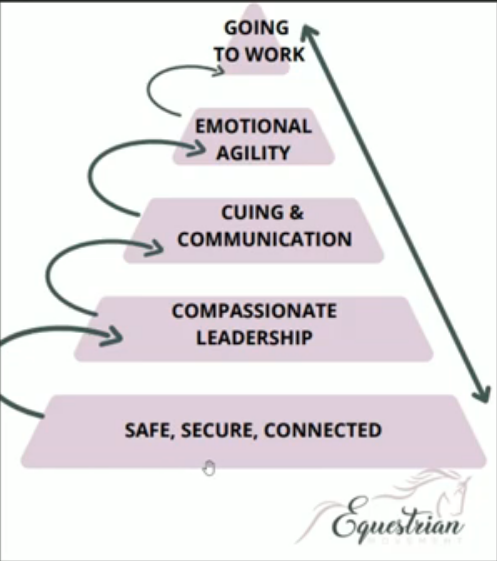
The number 1 mistake most people are making in their groundwork.
Understanding how the foundation pillars stack and where we often go wrong
There is one big mistake most people are making when they are doing groundwork.
Join us for what is "holistic horse handling part 2", where we uncover the pillars of training we are working to implement as we do our groundwork skills that actually make your groundwork skills more effective and help you create breakthrough moments for you and your horse to achieve your audacious goals!
Want to know more?
Love these videos and want more tips and training direct to your inbox? Sign up to the Movement Newsletter here:
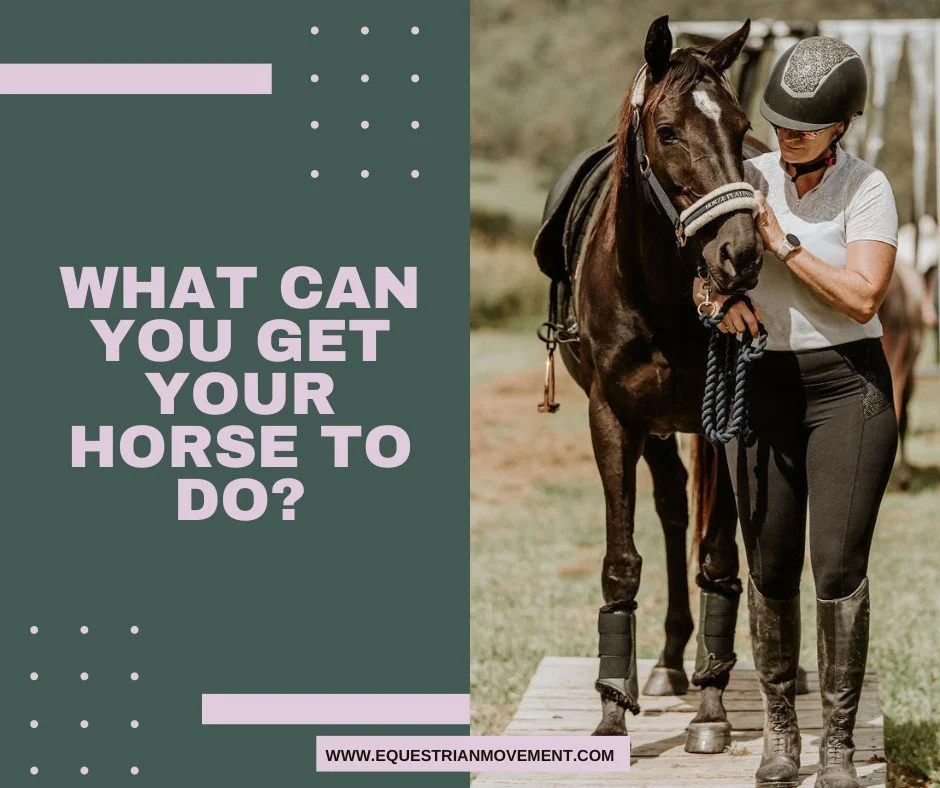
HELP ME WITH MY HORSE!!
When I go into a lesson with a new student we inevitably cover all the things they can get their horse to do. But, thats not why they have called me out for a lesson. They have got me out to help them to achieve all the things they can't get their horse to do!!
And here in lies the challenge…
When I go into a lesson with a new student we inevitably cover all the things they can get their horse to do. But, thats not why they have called me out for a lesson. They have got me out to help them to achieve all the things they can't get their horse to do!!
And here in lies the challenge. As a rider we can be ticking all the boxes of the things we CAN get our horse to do, never to revisit again.
"Oh that's too easy, too boring, we can already do that"
But its in the easy, boring things you can already do that you get to find out who your horse is when they are relaxed, when they know the answer, when they are confident and self assured.
Your horse gets to see who you are when you are relaxed, know how to ask it of them and are confident and self assure. This is a completely different relationship dynamic to the experience of each other when you are pushing, pressuring for more, stretching for goals, trying to challenge yourself and your horse.
The place of confidence, self assuredness and relaxation is somewhere we have to visit to start and finish every lesson and quite often the whole lesson so that we know what it looks like when the tension starts to build, when the frustration and angst kicks in or the fear.
Constantly pressuring our horse for performance, we only get to see the part of their personality that feels pressured and stressed. And that usual the part of the personality we like the least.
If you're just training to tick the boxes of the things your horse can do you've missed the point.
The point is what are you learning about yourself and your horse as you implement those exercises?
What to know how you can be the best partner for your horse on the ground so that you can be a team in the saddle? Our free, live, online stronger bond workshop kicks off next week.
🦄 Are you registered? Click the button below to sign up!
Looking for more specific content?
Have a question you are seeking answers to? Send us a message and we will create a blog!
The simple, step-by-step proven process that builds confidence, faith and trust with your horse and creates willing horses that want to look after you